How to Host a Dinner Party: A Complete Planning Guide
A practical guide to hosting a dinner party — from guest list and invitations to menu planning, seating, and making every guest feel at ease.
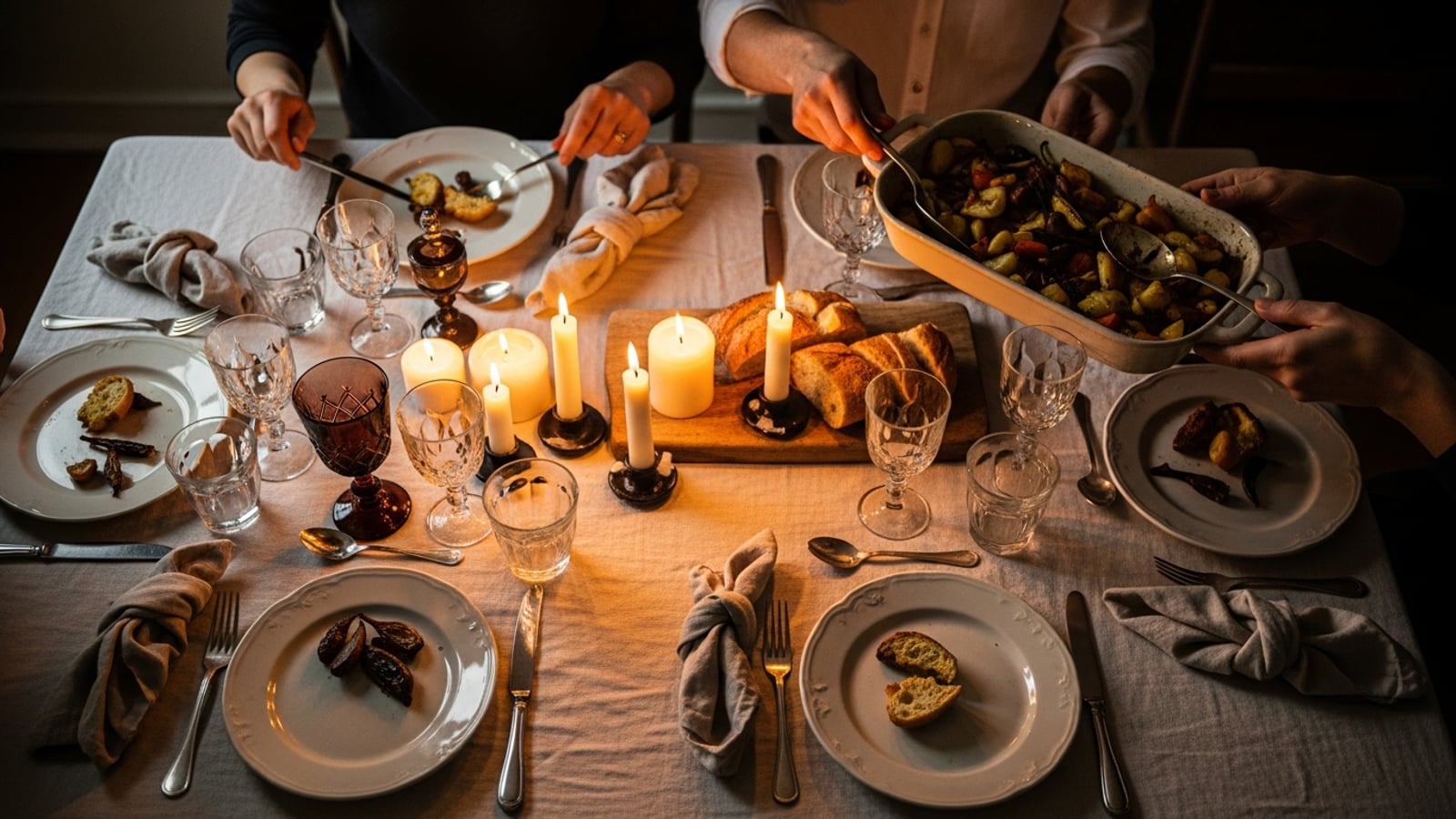
Hosting a dinner party sounds elaborate, but most of what makes it work comes down to a handful of decisions you make before the first guest arrives. Here is a practical guide for getting from blank calendar to a table full of happy people.
Decide on Your Guest List First
Guest count shapes everything else — your menu, your table, your prep time. For a first dinner party, six to eight guests is a manageable sweet spot that keeps conversation flowing without overwhelming your kitchen. If you are hosting for the first time, some etiquette advisors suggest starting with four to six people so you can be more present and less stretched by logistics. Once you have hosted a few times, twelve is entirely doable.
Think about the mix, not just the number. A dinner party is a conversation event — who you seat around that table matters as much as what you put on it.
Send Invitations With Enough Lead Time
For a casual dinner among friends, two to three weeks of notice is typically enough. For a more formal dinner, a special occasion, or a date in December when calendars fill fast, four to six weeks is the right window. The earlier you send, the better your odds of landing on everyone's calendar before they are already committed. See our full guide on when to send party invitations for specific timing by event type.
Your invitation should include:
- Date and start time — include the day of the week alongside the date
- Location — full address, and parking notes if it's a busy area
- The format — "seated dinner" or "dinner party at our place" tells guests what to expect and how to dress
- RSVP deadline and link — set your deadline one to two weeks before the event so you have time to plan around your final headcount
A dedicated RSVP form — not a group text or a "let me know!" — makes it far easier to track who is coming. Create a free RSVP page and your guests can confirm in under a minute, with all responses in one place.
Ask About Dietary Restrictions in the RSVP
The best time to collect dietary information is during the RSVP, not the day before the party. Include a field in your response form: "Please note any dietary restrictions or allergies." This gives you everything you need when you sit down to finalize the menu — not after the shopping is done.
Common restrictions to be aware of: vegetarian, vegan, gluten-free, nut allergies, shellfish allergies, dairy-free, and halal or kosher requirements. You do not need to become an expert in all of them — knowing ahead of time lets you adjust the menu rather than scramble at the last minute.
The most practical approach is to design the main course so it works for everyone rather than making a separate plate for one guest. A naturally gluten-free roast or a vegetable-forward main feels inclusive without calling attention to anyone's restriction.
Plan a Menu You Can Execute Without Stress
Choose dishes you can prepare mostly in advance. The goal is to spend the evening with your guests, not standing at the stove. A dinner party is not the right time to attempt a complicated new recipe.
A simple three-part structure works well for most home dinner parties:
- One or two appetizers — served while guests are still arriving, which gives you a relaxed buffer before everyone sits down
- A main course — something you can finish or plate quickly once you move to the table
- Dessert — store-bought is fine; home-baked is a bonus, not a requirement
Family-style service — dishes placed on the table for guests to pass — works especially well for a first dinner party. It is relaxed, scales easily, and creates a natural rhythm for conversation. For smaller, more formal gatherings, plated service is the right call, but it requires more timing precision in the kitchen.
Whatever you serve, make sure you can finish it in 30 minutes or less once guests arrive. A host who disappears into the kitchen for an hour is a host whose party stalls.
Set Up Seating Intentionally
For six or more guests, place cards eliminate confusion and give you control over the energy at the table. Rather than leaving guests to drift wherever they land, you can build a table that actually sparks good conversation.
Traditional etiquette places the guest of honor to the immediate right of the host. Beyond that, the most useful principle is to separate couples — spouses and partners seated next to each other tend to talk to each other, which breaks up the larger conversation. Place quieter guests between two more outgoing ones rather than next to each other. See how a seated dinner RSVP page looks to guests if you want to capture seat preferences or meal choices in advance.
If you end up with two tables, visit both during the meal. Guests notice which table the host gravitates toward.
Set the Mood Before Anyone Arrives
The atmosphere when the first guest walks in sets the tone for the whole evening. A few details that go a long way:
- Background music already playing — something conversational rather than distracting; jazz, acoustic, or a low-key playlist works well
- Drinks ready immediately — have something cold and something warm available so every guest has a drink in hand within minutes of arriving
- Soft or warm lighting — overhead lights at full brightness feel like a conference room; candles or dimmed lighting makes a table feel like a dinner
- Table set before anyone arrives — linens, glasses, and place settings done in advance, so you greet guests at the door instead of from the kitchen
Your Dinner Party Planning Timeline
Here is a practical countdown that works for most seated dinners:
- 3–6 weeks out: Set the date, finalize your guest list, and send invitations with an RSVP deadline of one to two weeks before the party.
- 2 weeks out: Confirm headcount once your deadline passes. Follow up with anyone who has not responded. Our guide on how to get guests to actually RSVP covers the right follow-up approach.
- 1 week out: Finalize your menu with dietary restrictions accounted for. Write your shopping list.
- 2–3 days before: Do the main grocery run. Prepare any components you can make ahead.
- Day of: Set the table in the morning. Handle remaining prep in the afternoon. By the time guests arrive, you should be finishing touches, not starting from scratch.
If you are weighing a dinner party against a more casual format, our guides on hosting a cocktail party and hosting a potluck cover the differences in structure, prep, and what guests expect.
The Part That Actually Matters
Most guests remember how they felt at a dinner party, not exactly what they ate. A host who is present and relaxed makes more of an impression than one who served an elaborate four-course meal while spending the night in the kitchen. Do the prep work early, set a clear RSVP process so you know what you are working with, and give yourself permission to enjoy your own party.
Create your RSVP page for free — guests get a clean link, you get a real-time dashboard of who is coming and what they need, and one of the most tedious parts of hosting takes care of itself.
Ready to create your event RSVP?
Build a beautiful event page in minutes. Share one link. Track every response in real time.
Create Your Free RSVP Link