How to Host a Potluck: The Complete Dish-Coordination Guide
How to host a potluck without duplicate dishes or missing mains — sign-up structure, dietary planning, food quantities, and day-of logistics.
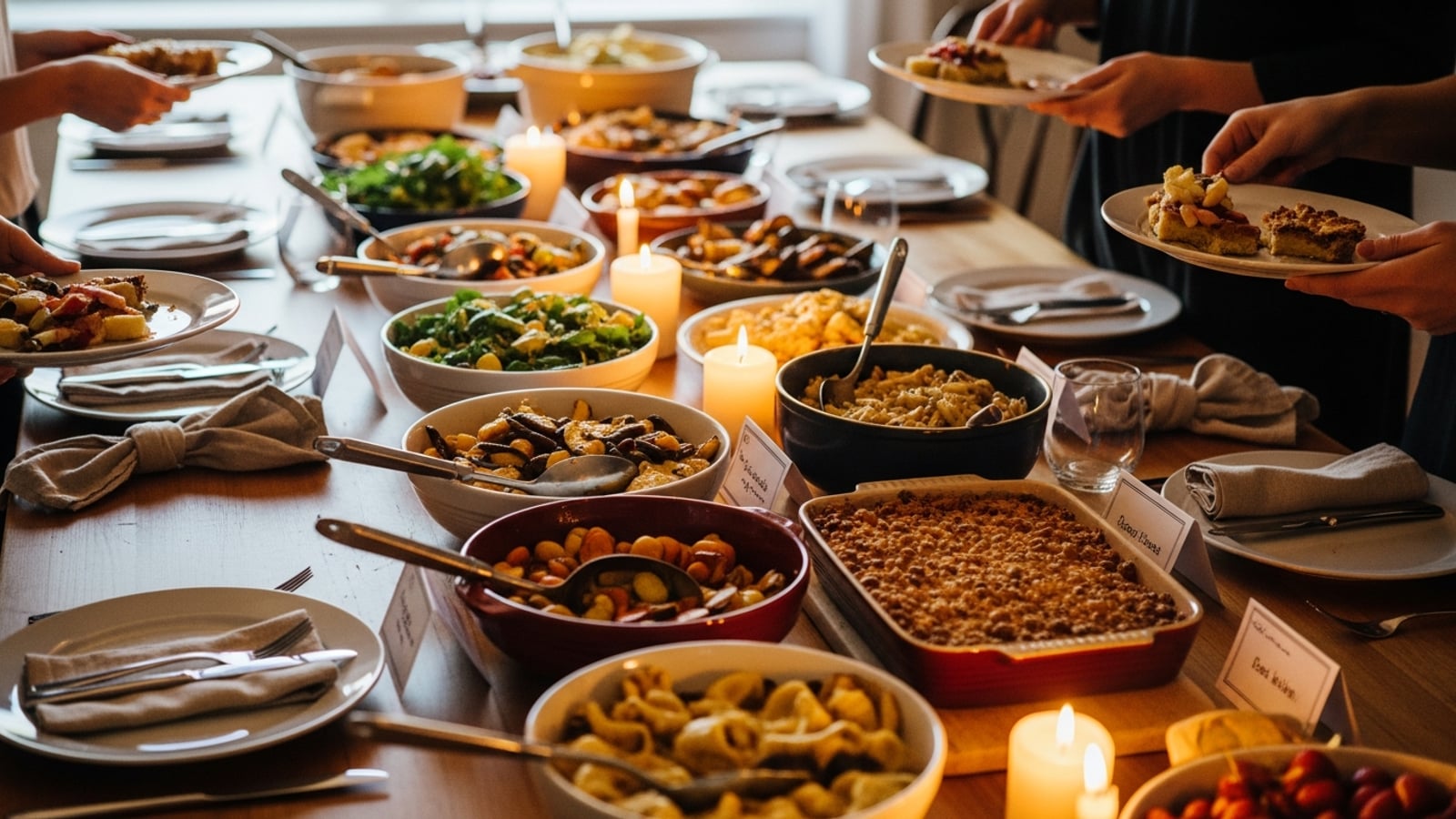
A potluck is the easiest kind of party to host — and the easiest to get wrong. Done well, you get a generous spread with almost no cooking burden on any one person. Done badly, you get four pasta salads, no main dish, and a guest with a nut allergy hovering nervously over unlabeled casseroles. The difference is coordination.
Here is how to host a potluck where the menu actually comes together.
Step 1: Decide the Structure Before You Invite Anyone
The biggest potluck mistake is sending an invitation that just says "bring something!" Vague instructions produce duplicate dishes, because most people default to the same easy crowd-pleasers. Before the invitations go out, decide:
- Course categories and how many of each you need. For a typical dinner potluck: 2–3 appetizers, 2 mains, 3–4 sides, 2 desserts, plus drinks and ice. Scale with your headcount.
- What you, the host, will provide. Convention says the host covers the anchor: the main dish, plus plates, utensils, cups, and napkins. Guests fill in around it.
- A theme, if you want one. Taco night, Italian, breakfast-for-dinner, "dishes from your family" — a theme makes the menu cohesive and actually makes choosing easier for guests, not harder.
Step 2: Use a Sign-Up, Not a Group Chat
Coordinating dishes over a group text fails for a simple reason: nobody scrolls back through forty messages to check whether someone already claimed dessert. You need one place where every guest can see what is already covered.
The cleanest way is to put the dish list directly on your event RSVP page — guests respond with whether they are coming and what they are bringing in the same step, and everyone can see the menu filling in. One link on the invitation, zero spreadsheet wrangling.
However you run the sign-up, make categories explicit and cap them: once two desserts are claimed, dessert is closed. That single rule is what prevents the all-brownie potluck.
Step 3: Ask About Dietary Restrictions Up Front
Collect allergies and dietary needs with the RSVP — not the day of the event. If a guest is gluten-free or vegetarian, you want at least one main and one side they can eat, and you want to know before the menu locks in.
Then, at the party, label the dishes. A folded index card with the dish name and the big three flags ("contains nuts", "vegetarian", "gluten-free") takes guests thirty seconds to write and saves every allergy-prone guest an awkward interrogation of the buffet line.
Step 4: How Much Food to Ask For
The working rule for potlucks: each guest brings enough of their dish to serve roughly the number of attendees divided by the number of dishes in that course — in practice, a dish that serves 8–12 covers most parties, because guests take small portions of many things rather than a full serving of each.
Do not over-assign. A 20-person potluck does not need 20 dishes; it needs about 10–12 generous ones. If your guest list is large, let some guests bring drinks, ice, or paper goods instead — those "non-cooking" slots are also perfect for the friend who genuinely should not be allowed near an oven.
Step 5: Coordinate Logistics, Not Just Food
- Oven and fridge time: You have one oven. If three dishes need reheating at 350°F at 6pm, you have a problem. Ask guests to bring food ready to serve, or stagger who gets the oven when.
- Serving utensils: Ask everyone to bring a serving spoon with their dish. Hosts always run out.
- Arrival timing: Appetizers should arrive with the earliest guests; desserts can come later. If a dish must arrive hot at a specific time, note it on the sign-up.
- Table space: Clear one long surface for the buffet line and set it in courses — plates first, mains and sides in the middle, desserts at the end or on a separate table.
Step 6: Send One Reminder With Assignments
A few days before the potluck, send a short reminder that includes each guest's dish, the address, and the start time. People forget what they signed up for more often than they forget the party itself. Our guide to RSVP reminder wording has copy-paste examples — the potluck version just adds one line: "You're down for the green bean casserole!"
The reminder is also your last chance to fill gaps. If nobody claimed a main, this is when you find out — while there is still time to fix it.
Common Potluck Pitfalls
- The "bring whatever" invitation. Structure is a kindness, not bossiness. Guests prefer being told "we need a side" to guessing.
- No backup plan for flakes. A few signed-up dishes will not show. Keep one frozen lasagna or a pantry pasta you can produce in 30 minutes if a main goes missing. See our guide on managing your guest list for handling the no-show math.
- Forgetting the non-food jobs. Ice, drinks, cups, and cleanup help are real contributions. Assign them.
- Letting the RSVP slide. A potluck is the one party where headcount and menu are the same problem — if guests don't respond, you don't just have a seating question, you have a missing course. Read how to get guests to actually RSVP if your list goes quiet.
The Bottom Line
A great potluck is 90% decided before the day: clear categories, one visible sign-up, dietary info collected with the RSVP, and a single well-timed reminder. Set that up and the party runs itself — everyone eats well, nobody cooked for twelve hours, and you only had to make one dish.
Setting up the sign-up is the five-minute part: create a free RSVP page, list the dish categories you need, and share one link. Works just as well for a backyard BBQ as for a holiday spread.
Ready to create your event RSVP?
Build a beautiful event page in minutes. Share one link. Track every response in real time.
Create Your Free RSVP Link