
How to Host a Cocktail Party: A Complete Planning Guide
Everything you need to host a cocktail party — guest list, invitations, RSVP, drinks, and appetizer quantities for a flawless soirée.
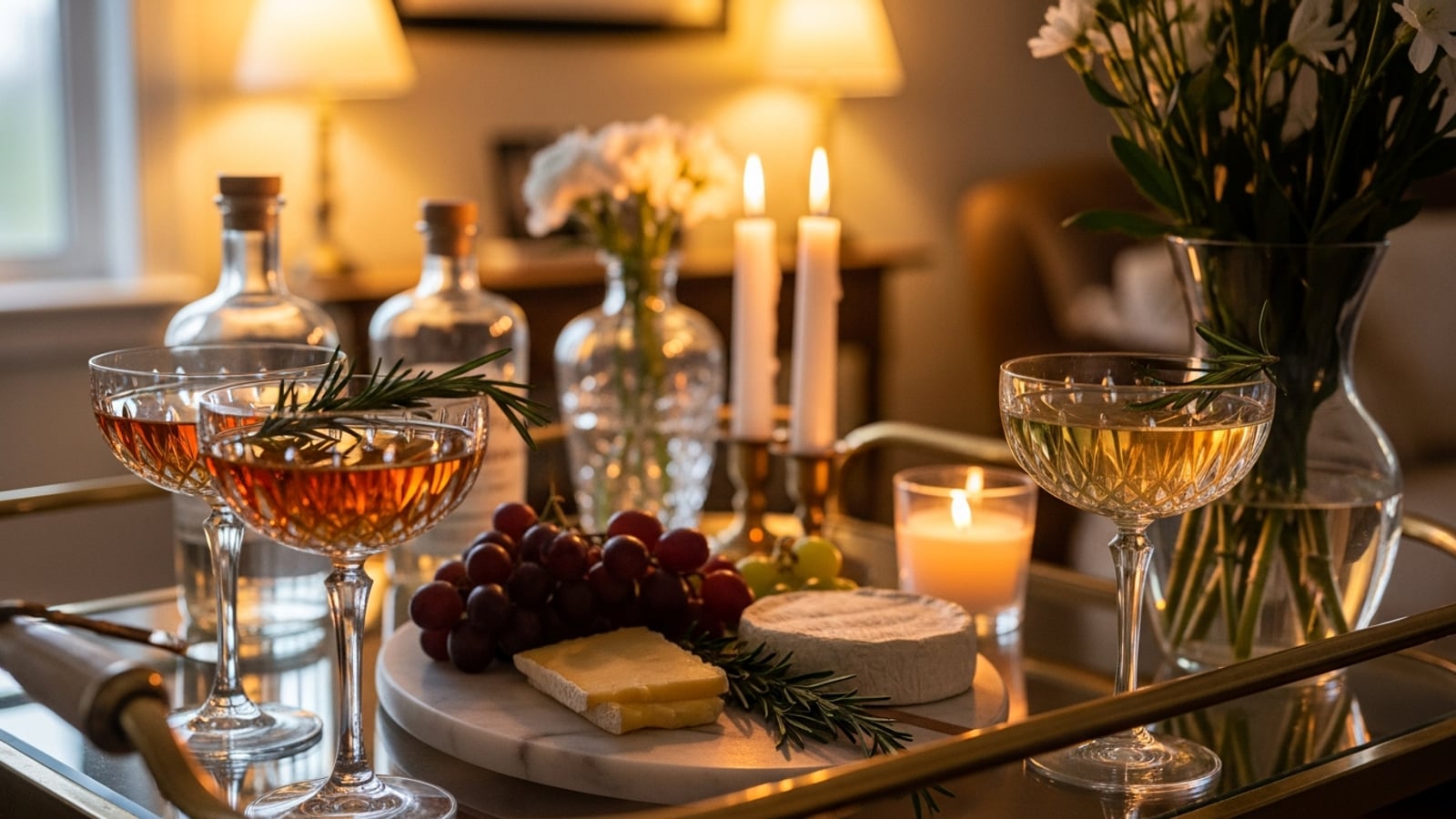
A cocktail party is one of the most versatile event formats you can host. It is elegant without requiring a formal seated dinner, social without demanding that guests stay for a set number of hours, and manageable without a full catering crew. Get the planning right and you can pull it off for 15 guests in your living room or 40 in a backyard — with a bar cart, a few trays of appetizers, and the right music.
Here is exactly how to plan one.
Start With the Basics: What Kind of Cocktail Party?
Before you start ordering spirits, nail down three things: how many guests, how long, and what occasion. A cocktail party typically runs two to three hours — long enough for guests to relax and mingle, short enough that you do not need a full meal. The occasion shapes the tone: a holiday gathering feels different from an engagement celebration, even if the format is identical.
A cocktail party where drinks and light bites are the entire event is the classic format. Some hosts serve a proper meal afterward — in which case, scale the food down significantly. Know which you are hosting before you plan quantities.
The Guest List: How Many Is the Right Number?
The sweet spot for a home cocktail party is roughly 15–20 guests. Fewer than that can feel flat — a cocktail party's energy comes from people circulating and meeting each other. More than 30 in an average home starts to strain the bar, the bathrooms, and your ability to actually talk to anyone.
If your space can handle more, think about staffing. For 30 or more guests, having one person dedicated to the bar — and one to circulating appetizers — makes a significant difference in how the party flows.
Invitations: Timing and What to Include
Send cocktail party invitations two to three weeks in advance. That is enough lead time for guests to plan, but not so far ahead that the invitation gets misplaced. For a busy holiday season, push closer to four weeks.
Every cocktail party invitation should include:
- Date, start time, and end time. Cocktail parties have a defined window — tell guests when it closes so they know to arrive within it.
- Location. Full address, not just "my place."
- Dress code. More on this below — it is especially important for cocktail parties where "cocktail attire" means something specific.
- RSVP deadline and method. Set the deadline five to seven days before the event so you have time to finalize bar and food quantities.
A cocktail party RSVP page lets guests confirm attendance and flag dietary restrictions or alcohol abstentions in one place — exactly what you need to stock the bar and plan the food. Create yours in a few minutes and drop the link on your invitation.
For guidance on timing across different event types, see our complete invitation timing guide.
The Bar: What to Offer and How Much
You do not need a full bar. A focused menu of three or four drinks — executed well — beats ten mediocre options every time. A practical setup:
- One signature cocktail. Batch it the afternoon before and it becomes a pitcher guests can pour for themselves. Pick something seasonal: a gin spritz in summer, a spiced bourbon punch in fall.
- Wine. One red and one white covers most guests who prefer wine over spirits.
- Something sparkling. Prosecco or champagne reads as celebratory and pairs with almost any appetizer.
- A non-alcoholic option. A sparkling water station with citrus slices, or a zero-proof version of your signature cocktail, ensures every guest has something interesting to hold.
For quantities, plan on two drinks per person in the first hour and one per hour after that. A two-hour party for 20 guests means roughly 60 drink servings total. Round up rather than down — running short on drinks is far worse than having a few bottles left over. And keep more ice than you think you need: it is almost always the thing hosts run out of first.
The Food: Appetizers, Not a Meal
For a standalone cocktail party lasting two to three hours, standard catering guidance is six to eight appetizer pieces per person. That keeps guests comfortably fed without the party crossing into dinner territory.
The easiest approach: anchor the food with two or three no-cook items that guests can graze on throughout the party — a cheese board, a charcuterie selection, a crudité platter with dips — and add one or two passed or stationed hot bites. This mix means something is always available, you are not running in and out of the kitchen all night, and guests who arrive at different times all find something to eat.
If you are serving dinner afterward, scale back to three or four pieces per person and keep everything light. The appetizers should whet appetites, not satisfy them.
Setting the Scene
Cocktail parties succeed on flow. Arrange the space so guests naturally circulate rather than pile up near the entrance:
- Separate stations. Bar in one area, food in another, seating scattered around. If everything is in one spot, that spot becomes a bottleneck.
- Clear pathways. Move extra furniture out of the main space so people can move freely between conversations.
- Music at the right level. Audible but quiet enough that guests do not have to raise their voices — background jazz or a low-tempo playlist sets a relaxed, elegant tone without overwhelming the room.
- Soft lighting. Lamps on, overhead lights off. Add candles if you have them. The mood shift from bright overheads to warm, scattered light is immediate and dramatic.
Dress Code: What to Tell Your Guests
Cocktail attire is semi-formal: knee-length dresses or dressy jumpsuits for women, dark suits or sport coats for men. When guests see "cocktail party" on an invitation, most automatically assume this level of dress.
Be explicit when you want something different. If your party is casual — backyard, summer, no suits required — write it on the invitation: "smart casual" or "come as you are." Showing up overdressed when others are in jeans is uncomfortable, and it is easily avoided with a single line of text.
Cocktail parties are naturally adult events. If yours is adults-only, our guide on polite adults-only invitation wording has language that gets the message across without awkwardness.
Day-Of Timeline
The goal is to be a guest at your own party — not a server. Work backward from your start time:
- Day before: Set up the bar cart, chill bottles, batch the signature cocktail, and assemble the cheese board (minus any fresh garnishes).
- Two hours before: Arrange the space, set out serving trays and napkins, confirm you have enough ice.
- Thirty minutes before: Open wine, lay out the food stations, light candles, start the music.
- At start time: Be dressed and at the door to welcome the first arrivals.
Lock In Your Headcount First
A cocktail party feels casual — but your bar and food quantities are directly tied to how many people are actually coming. Not knowing whether 12 or 22 guests are attending is the difference between running out of champagne and buying twice what you needed.
Set a clear RSVP deadline, send a short reminder a few days before it closes, and track responses in one place rather than across texts, emails, and voice messages. Create a free cocktail party RSVP link — it takes minutes to set up and gives you a clean list of confirmed guests, dietary restrictions, and everything you need to shop and plan with confidence.
Ready to create your event RSVP?
Build a beautiful event page in minutes. Share one link. Track every response in real time.
Create Your Free RSVP Link