How to Host a Kwanzaa Celebration: A Complete Host's Guide
Everything you need to host a meaningful Kwanzaa gathering — the seven-night ceremony, Karamu feast, table setup, and how to invite your community.
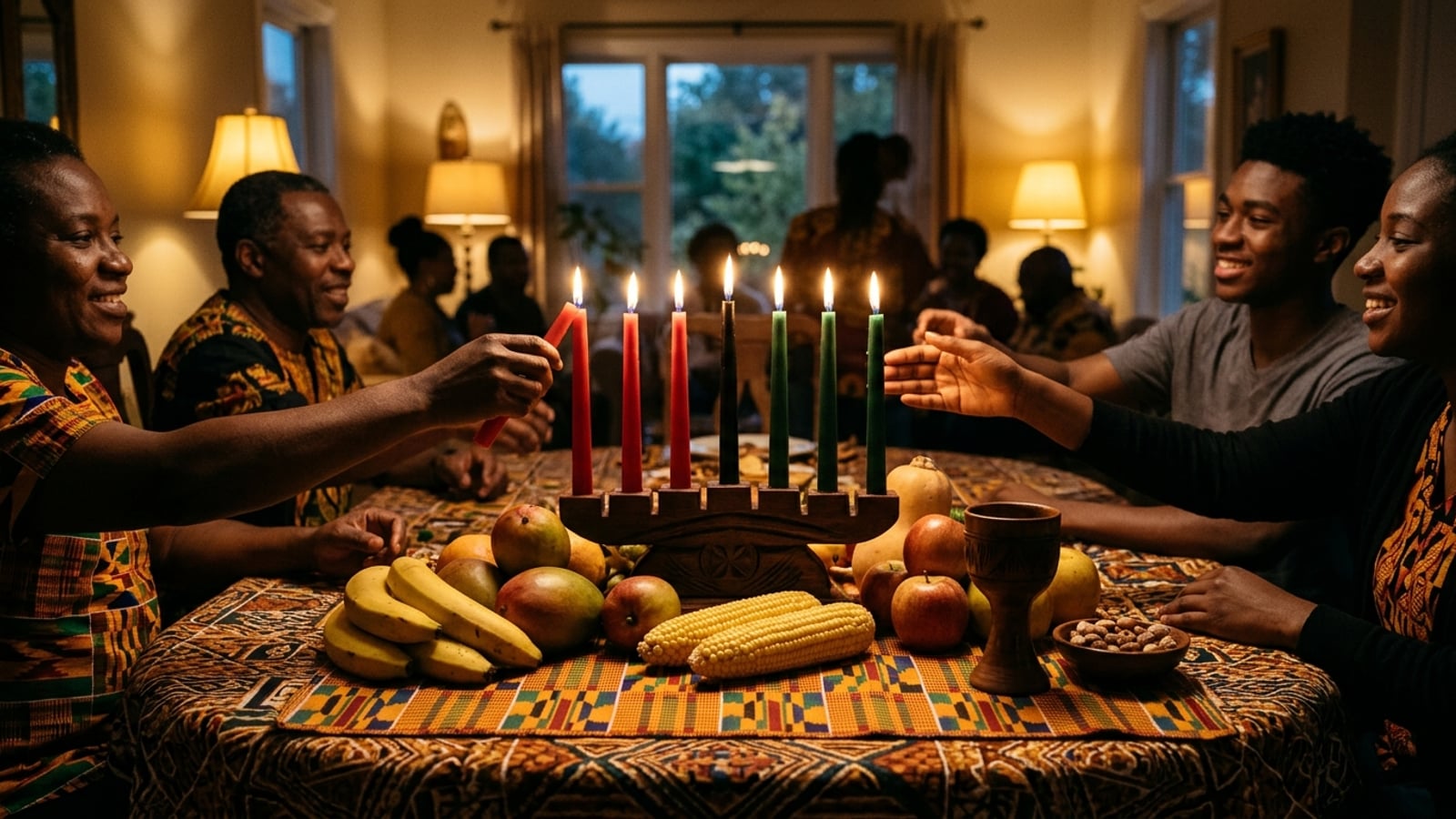
Kwanzaa runs December 26 through January 1 — seven nights of candle lighting, communal meals, storytelling, and cultural reflection. If you are hosting a Kwanzaa gathering for the first time, or bringing the tradition to a new group, this guide covers everything you need: the ceremony, the Karamu feast, the decorations, and how to invite your guests in a way that sets the right tone.
What Kwanzaa Celebrates
Kwanzaa was created in 1966 by scholar and activist Maulana Karenga as a way to honor African American and Pan-African heritage and to affirm the values that hold communities together. The name comes from the Swahili phrase matunda ya kwanza, meaning "first fruits of the harvest." Each of the seven nights is dedicated to one of the seven principles known as the Nguzo Saba — a framework for community life that forms the heart of the holiday.
The Seven Principles (Nguzo Saba)
Each night, a new candle is lit and the evening's principle is discussed, reflected on, or acted upon:
- Umoja (Unity) — Dec. 26: Building and maintaining unity in family, community, nation, and people.
- Kujichagulia (Self-Determination) — Dec. 27: Defining and naming ourselves, and speaking for ourselves.
- Ujima (Collective Work and Responsibility) — Dec. 28: Building and maintaining community together, making each other's problems our own to solve collectively.
- Ujamaa (Cooperative Economics) — Dec. 29: Building and sustaining our own businesses and sharing in that prosperity.
- Nia (Purpose) — Dec. 30: Making the collective vocation of building and developing our community the center of our work.
- Kuumba (Creativity) — Dec. 31: Always striving to leave the community more beautiful and beneficial than we inherited it.
- Imani (Faith) — Jan. 1: Believing with all our hearts in the people, parents, teachers, and leaders of our community.
Setting Up the Kwanzaa Table
The centerpiece of every Kwanzaa gathering is the table display, which includes seven traditional symbols. Setting it up together can be a meaningful opening activity if you are hosting guests who are new to the holiday.
- Mkeka (mat): A woven straw or kente-cloth mat that anchors the display — everything else rests on it.
- Kinara (candleholder): Holds the seven mishumaa saba. The black candle sits in the center; three red candles go on the left; three green candles go on the right.
- Mishumaa Saba (seven candles): Lit one per night, beginning with the black candle on Dec. 26. Red represents the struggles of the people; green represents hope and the future; black represents the people themselves.
- Mazao (crops): Colorful fruits, nuts, and vegetables that represent the harvest and the fruits of collective work.
- Vibunzi (ear of corn): One ear for each child in the household. If there are no children present, place two ears anyway — they represent community parenthood and honor the children of the broader community.
- Kikombe cha Umoja (unity cup): A single communal cup used in the libation ceremony at the Karamu feast on Dec. 31.
- Zawadi (gifts): Traditionally books, African art, or handmade items set aside and given on the final night, Imani (Jan. 1).
Arrange everything on the mkeka and fill the surrounding space with African textiles, prints, and art. The table display is not decorative — it is functional, and guests will gather around it each night for the candle ceremony. Knowing your guest count in advance helps you arrange seating properly; an online RSVP page for a family or community gathering is the simplest way to get that number before the first night.
The Nightly Ceremony
Each evening follows the same simple structure:
- The host calls out "Habari gani?" (What's the news?) — guests respond with that night's principle.
- A family member or elder lights the night's candle. Start from the center black candle, then alternate outward: left red, right green.
- Someone leads a brief discussion of the night's principle — what it means, how the family has embodied it this year, and what the household intends for the year ahead.
- Music, storytelling, poetry, or a shared activity follows. The atmosphere is warm and participatory, not formal.
If you are not hosting all seven nights, many hosts anchor their gathering around the Karamu feast on Dec. 31, or hold a Umoja night on the first evening. A single well-hosted evening carries the spirit of the holiday fully. For similar multi-night cultural gathering formats, see our guide on hosting a Hanukkah party — the structure of nightly gathering and ceremony is comparable.
The Karamu Feast (Dec. 31)
The sixth night is the Karamu — the communal feast and the largest celebration of the week. It falls on December 31 and often blends into New Year's Eve. The feast centers on the unity cup libation, shared gratitude, and a meal that draws from African, African American, and Caribbean culinary traditions.
What to Serve
There is no fixed Karamu menu, but certain dishes appear across families and regions. Black-eyed peas and collard greens are the most traditional pairing — black-eyed peas are tied to luck in the new year, and collard greens to fortune. Some families add a coin to the black-eyed pea pot as a prosperity tradition. Jollof rice is a fragrant West African staple that works well as a communal side. Other common dishes include candied yams, cornbread, macaroni and cheese, jerk chicken, fried okra, and sweet potato pie for dessert.
Plan at least one vegetarian dish so every guest can eat fully at the table. Color the spread with the holiday palette where it fits naturally: red dishes like jollof and sweet potato pie, green from collard greens, rich earthen tones throughout. If the feast is potluck — a natural choice for Ujamaa night — tell guests the principle you are honoring and invite them to bring a dish that reflects their own family's cooking traditions.
The Libation Ceremony
At the Karamu, the host pours water or juice into the kikombe cha Umoja and offers a libation in honor of ancestors. The cup is then passed around the table, with each person taking a sip as a gesture of unity and remembrance. Keep the ritual brief and reverent — it is the emotional center of the evening, not a long ceremony. The meal that follows it should feel like a natural continuation of that warmth.
Planning a large Karamu? Our guide to hosting a Friendsgiving covers communal feast logistics — potluck coordination, seating, and timing — that translate directly.
Inviting Your Guests
Send Kwanzaa invitations at least two weeks before Dec. 26. The week between Christmas and New Year's fills quickly, and your guests need lead time to plan. Your invitation should cover:
- Which nights you are hosting (all seven, or specific evenings)
- Whether the Karamu is fully hosted or potluck
- Whether children are welcome
- Whether guests should bring a zawadi exchange gift
- How to RSVP and by when
A short note for first-timers goes a long way: something like "We'll light the kinara together, share a meal, and reflect on the principles. No prior experience needed — just bring yourself." Create a free RSVP page so you have an accurate headcount for food, seating, and corn ears on the display. Knowing exactly who is coming before the first night removes the guesswork from every part of the setup.
Gifts and the Final Night
Zawadi are traditionally given on Imani, January 1. The emphasis is on meaningful over expensive: books, handmade items, African art, and gifts that encourage growth, self-determination, or learning. For gatherings with children, plan for each child to receive at least one book. For adults, a communal commitment — volunteering together, supporting a Black-owned business, creating something as a group — is itself a form of zawadi that honors the spirit of the day.
If you plan a New Year's Day gathering to close out the week, see our guide on New Year's Eve party planning for timeline and hosting tips that carry into the following morning.
Make It Yours
Kwanzaa is not a rigid, scripted holiday. It is intentionally communal and designed to take the shape of the people who celebrate it. Start with the table display, one candle, and one question: Habari gani? Let the conversation lead you from there. Set up your Kwanzaa RSVP page and bring your community to the table.
Ready to create your event RSVP?
Build a beautiful event page in minutes. Share one link. Track every response in real time.
Create Your Free RSVP Link