How to Handle Dietary Restrictions at a Party
A practical host's guide to asking about food allergies, planning an inclusive menu, labeling dishes, and preventing cross-contamination at your next event.
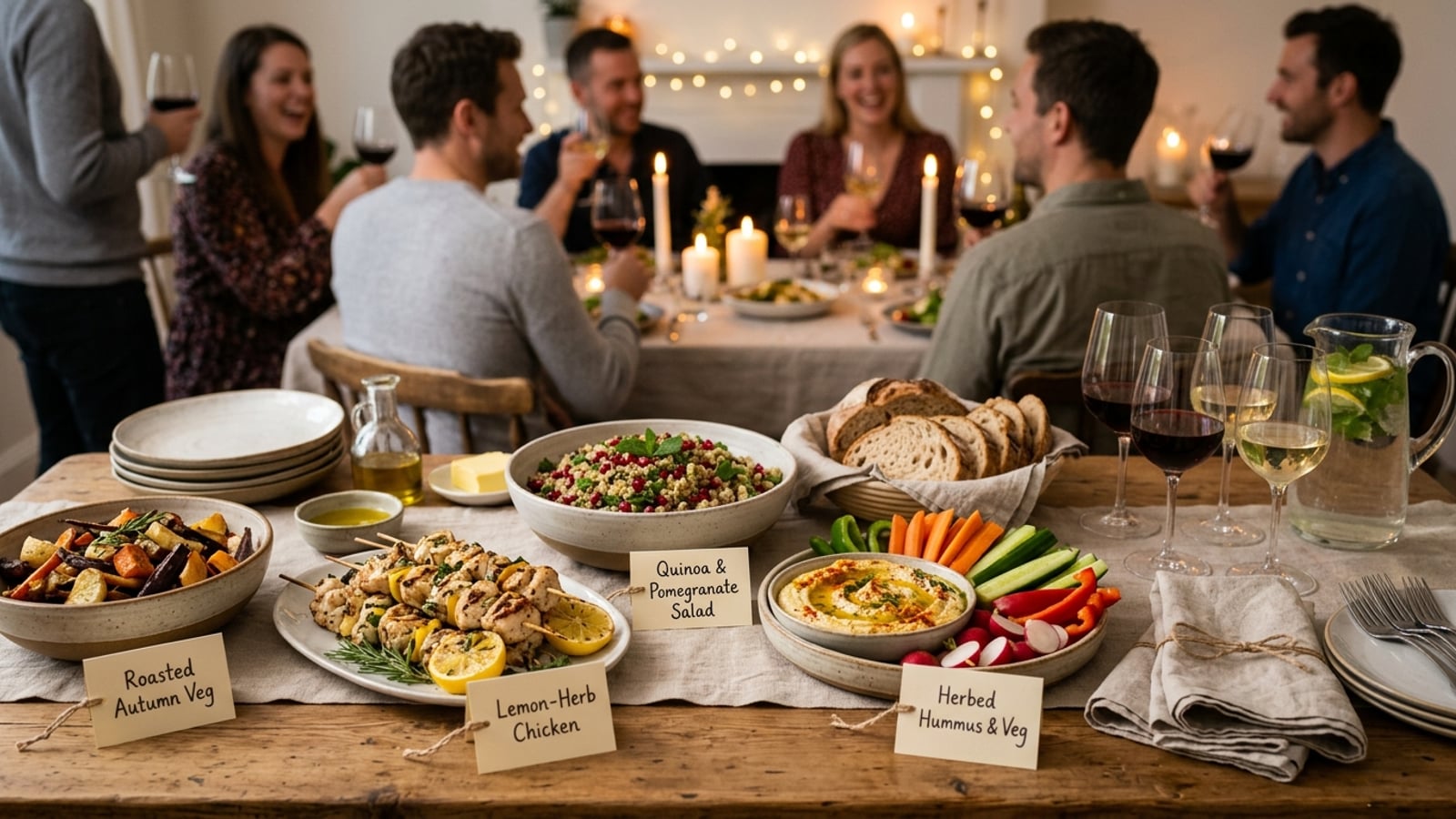
At any party today, a meaningful share of your guest list is navigating a food restriction — a peanut or tree nut allergy, a gluten intolerance, a vegan diet, or a religious dietary law. The CDC's 2024 National Health Interview Survey found that 6.7% of U.S. adults have a diagnosed food allergy. Add guests who are vegetarian, vegan, gluten-free by choice, or observing kosher or halal rules, and it's reasonable to expect that 10 to 15 percent of your guest list will have some food-related need. That's a real part of the room, and the way you handle it determines whether those guests feel like full participants in the evening or an afterthought.
Handling this well doesn't mean cooking separate meals for every guest. It means asking the right questions early, building a menu that's more inclusive by default, and communicating clearly at the table.
Step 1: Ask When Guests RSVP
The easiest moment to collect dietary information is when guests confirm they're coming. On a paper reply card, add a simple line: "Please note any dietary restrictions or food allergies." In a digital RSVP — which gives you a searchable list you can actually use when planning — include a dedicated free-text field.
Create a free RSVP page with a custom dietary field so every response lands in one dashboard. When the day arrives you'll know exactly how many guests are vegetarian, who has a nut allergy, and who keeps kosher — without chasing replies by text or trying to remember what someone mentioned in passing.
Keep the question broad: "Do you have any food allergies, intolerances, or dietary restrictions I should know about?" A narrower prompt like "Do you have a nut allergy?" misses everything else. Give guests a free-text field rather than a checklist — people with unusual restrictions or several overlapping needs can explain in their own words.
Etiquette goes both ways. As a host, asking is your responsibility. As guests, communicating restrictions when they accept — not at the door, not at the table — is theirs. If you're expecting late or non-responsive RSVPs, our guide on RSVP reminder wording has follow-up scripts that get responses before you finalize your menu.
Step 2: Understand the Common Categories
The restrictions you're most likely to encounter fall into three groups:
Medical allergies
The FDA recognizes nine major food allergens — the "Big 9" — that together account for more than 90% of food allergies in the United States: milk, eggs, fish, crustacean shellfish, tree nuts, peanuts, wheat, soybeans, and sesame. (Sesame was added as the ninth in 2023 under the FASTER Act.) For guests with any of these allergies, cross-contamination can trigger a real immune response. A peanut or shellfish allergy can cause anaphylaxis — a life-threatening reaction requiring emergency treatment.
Medical intolerances
Celiac disease is an autoimmune condition where even trace amounts of gluten (in wheat, rye, and barley) cause intestinal damage — quite different from non-celiac gluten sensitivity, which causes discomfort but no immune reaction. Lactose intolerance is similar: uncomfortable but not dangerous, and many people with it can tolerate hard cheeses, butter, or small amounts of dairy. It's worth clarifying what your guest needs rather than assuming.
Dietary preferences and religious laws
Vegetarians avoid meat and fish; vegans skip all animal products including eggs, dairy, and honey. Guests keeping kosher or halal have rules around sourcing, preparation, and what foods can be combined — for strictly observant guests, home-cooked food may not qualify regardless of ingredients, and it's fine to ask them what they need before assuming you can accommodate fully.
Step 3: Plan a More Inclusive Menu
The most effective strategy isn't to cook a separate meal for every restriction — it's to build your menu so that most dishes are naturally accessible to most guests, and no one is visibly singled out.
Lean on naturally free-from dishes. Roasted vegetables, grain salads, fresh fruit, grilled proteins without marinades, and bean-based dips tend to be free of the most common allergens and work for vegetarians, gluten-free guests, and dairy-free guests all at once. When a dish happens to serve multiple needs, that's a win — you don't have to engineer the whole menu around it.
Serve sauces and toppings on the side. A roasted chicken is accessible to most guests; one smothered in a cream sauce is not. Keeping dressings, gravies, and condiments separate lets guests control what goes on their plate and makes your dishes far more adaptable without extra cooking.
You don't have to accommodate everything. If your family's signature dish is non-negotiable, include it — just make sure guests with restrictions have enough other options that they're eating a full meal, not picking through sides. Trying to make one dish satisfy every restriction often results in something nobody loves. A couple of dishes that are naturally inclusive alongside your classics is a better outcome than one contorted dish that's technically compatible with everything.
For potluck-style events, share your guest restriction list with contributors early so they know what the table needs to cover. A potluck RSVP page lets guests sign up for specific dishes and note what dietary needs each dish meets. See the full guide on how to host a potluck for a dish-coordination system that works.
Step 4: Label Your Table
Clear labeling is one of the highest-impact, lowest-effort things you can do. It removes guesswork, lets guests serve themselves confidently, and means you're not fielding "what's in this?" questions all evening.
For each dish on a buffet or shared table, use a small tent card or folded index card and include:
- The dish name
- Key allergens it contains (e.g., "Contains: dairy, eggs")
- Positive labels where accurate (e.g., "Gluten-free," "Vegan," "Nut-free")
Only apply allergen-free labels when you're genuinely confident in your preparation. Don't label something "gluten-free" if it was prepared on a surface also used for bread or pasta — that creates false confidence for someone with celiac disease. When in doubt, leave the label neutral and let guests ask you directly.
For the Big 9 allergens especially, label every dish that contains them, even when it seems obvious. Eggs appear in pasta, soy in many sauces, sesame in hummus and some oils. Guests with severe allergies will want to verify rather than assume.
Step 5: Prevent Cross-Contamination
For guests with serious allergies, the food itself isn't the only concern — shared serving utensils, prep surfaces, and cooking oil can all transfer allergens.
- Prepare allergy-friendly dishes first, before your surfaces have been used for allergen-containing foods.
- Use a dedicated serving utensil for each dish at the table so guests don't inadvertently transfer allergens when scooping.
- Wash hands and surfaces thoroughly between preparing allergen-containing foods and allergy-safe ones. Standard soap and water is effective.
- For guests with celiac disease, shared pasta water, colanders, and cooking oil can be enough to cause a reaction. When in doubt, ask the guest directly what level of precaution they need — they know their condition best.
- If a guest has a severe allergy, let them know if the allergen is present in the kitchen at all, even in dishes they won't be eating. Airborne particles are rarely a concern in a typical home, but it's worth saying so they can make their own judgment.
What to Do If Something Gets Missed
Even with a careful RSVP process, a guest may arrive with a restriction they forgot to mention, or one you couldn't fully accommodate. A good host handles this without drama:
- Know what's in every dish on your table so you can answer ingredient questions on the spot.
- Keep backup options on hand: raw vegetables, plain crackers, fresh fruit, and hummus cover a wide range of restrictions and are easy to pull out without fanfare.
- If a guest genuinely can't eat safely, help them put together a plate from what's available, and let them supplement without making it the focus of the evening.
The Short Version
Ask when guests RSVP. Build a menu with naturally inclusive dishes. Label everything on the table. Use separate serving utensils. And if you're unsure about a guest's specific needs, ask them directly — they will appreciate the question far more than a table full of food they can't touch.
The practical foundation for all of this is knowing your restrictions before you plan your menu. The easiest way to collect that information: create a free RSVP page with a dietary field and get every response in one place. And if you're hosting a sit-down dinner, see our guide on how to host a dinner party for a full planning timeline that builds in time to source specialty ingredients once you know what you're working with.
Ready to create your event RSVP?
Build a beautiful event page in minutes. Share one link. Track every response in real time.
Create Your Free RSVP Link