
How to Host a Sukkot Celebration: A Complete Host's Guide
Everything you need to host a beautiful Sukkot dinner — building a sukkah, menu planning, decorating, and welcoming guests to the harvest holiday.
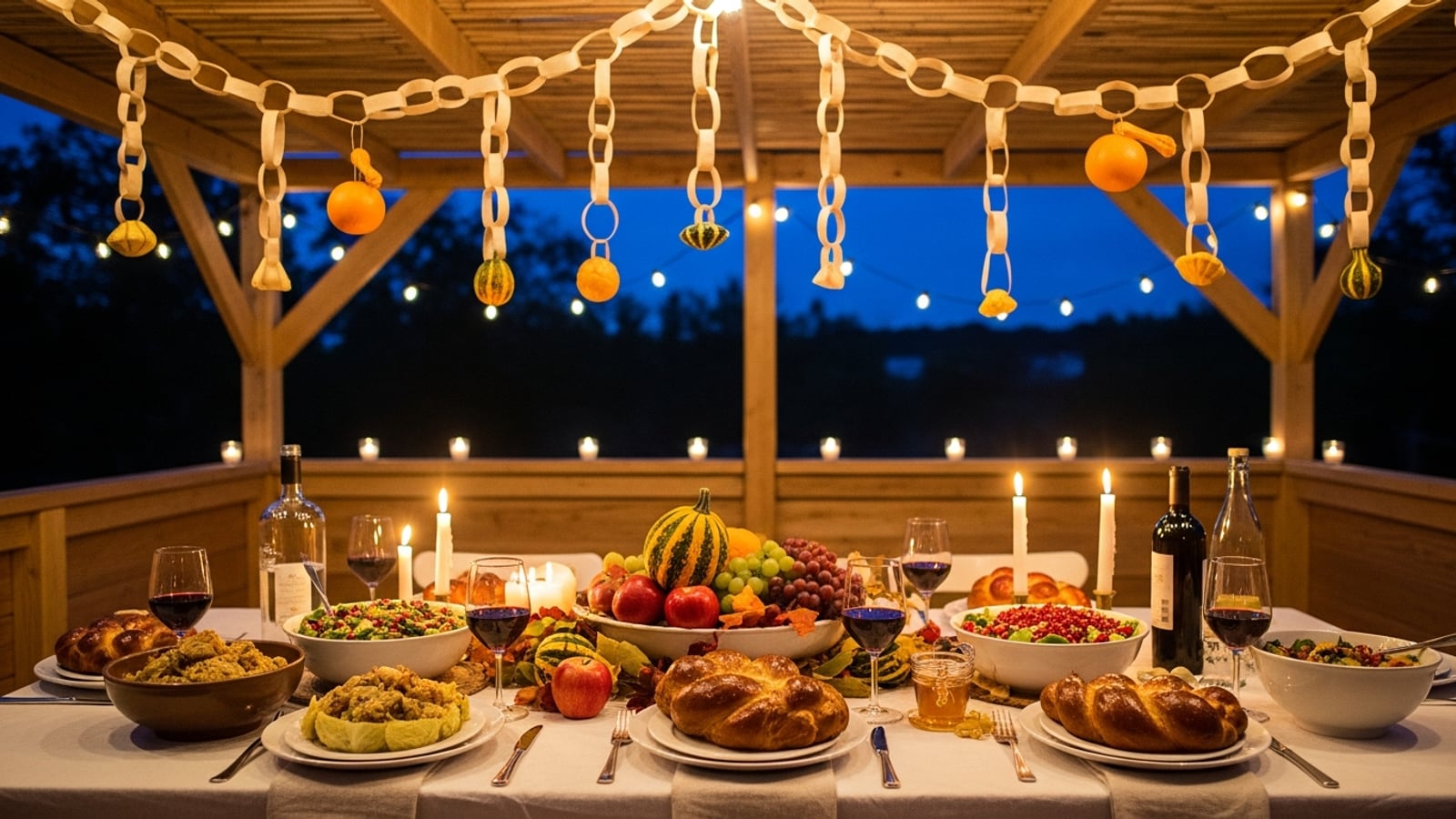
Sukkot is one of the most joyful holidays on the Jewish calendar — a seven-day harvest festival where the central mitzvah is welcoming guests into a temporary outdoor structure and celebrating together under the stars. If you want to host a Sukkot dinner for family and friends, here is everything you need to do it well.
What Is Sukkot?
Sukkot (pronounced soo-KOTE, or SOOK-us in Ashkenazi tradition) begins at sundown on Friday, September 25, 2026 — five days after Yom Kippur — and lasts seven days through October 2. The name means "booths" in Hebrew, referring to the temporary huts Jewish families build and eat in throughout the holiday. Sukkot commemorates both the fall harvest and the forty years the Israelites spent in the desert after the Exodus, dwelling in temporary shelters under divine protection.
It is called Zman Simchateinu — "the Season of Our Rejoicing" — and is one of the few holidays where Scripture explicitly commands joy. In the High Holidays sequence: if Rosh Hashanah is the solemn new year and Yom Kippur's break-fast is quiet relief, Sukkot is the full-throated joyful exhale — an entire week of open doors, outdoor dinners, and abundant food.
Build the Sukkah First
Tradition holds that sukkah construction begins the moment Yom Kippur ends — a beautiful leap from atonement straight into building. For 2026, that means you can start the night of September 20 and finish by September 25. Pre-assembled kits are widely available online and at Jewish supply stores; a DIY sukkah from lumber and bamboo works just as well.
What makes a sukkah halachically valid:
- At least three walls — plywood, canvas, pallets, and fence panels all work.
- Schach (the roof) must be organic, detached plant material — bamboo poles, reed mats, pine branches, or palm fronds. No metal, plastic, or finished lumber.
- Walls first, schach second. Laying the roof before completing the walls invalidates the sukkah.
- More shade than sunlight at midday — the schach must cover more than half the roof area.
- No metal fasteners holding the schach in place; use twine or wooden clips.
There is no maximum size — build as large as your space allows. A sukkah comfortably seating eight to ten guests makes hospitality easy.
Decorating the Sukkah
Decorating the sukkah is itself a mitzvah. The principle of hiddur mitzvah — beautifying a commandment — applies here, and the tradition is to make the space as welcoming as possible. Children can participate in almost all of it:
- Paper chains strung across the walls or hung from the schach beams — a perennial children's project
- Hanging fruit and gourds — apples, oranges, grapes, and ornamental corn tied from the schach overhead
- String lights or battery-operated lanterns for warm evening ambiance (LED lights are safest near plant-material roofing)
- Seasonal gourds, squash, and dried flowers placed on the table as a centerpiece
- An ushpizin chart listing the seven biblical ancestors — Abraham, Isaac, Jacob, Moses, Aaron, Joseph, and David — who are spiritually invited into the sukkah each night of the holiday
The ushpizin tradition carries a practical message: inviting these spiritual guests means you should also invite real ones, especially people who do not have their own sukkah to celebrate in.
Plan a Make-Ahead Menu
The reigning theme of Sukkot food is stuffed dishes — symbolizing the harvest's abundance and the sukkah's protection surrounding you. Stuffed cabbage (holishkes), kreplach (meat-filled dumplings served in chicken soup), and challah dipped in honey — the Tishrei sweet-start custom that continues through Sukkot — are the Ashkenazi standards. Sephardic and Mizrahi traditions bring an array of stuffed vegetables: stuffed grape leaves, zucchini, peppers, and Swiss chard cooked with pomegranate or tamarind sauce.
Practical tips for the host:
- Choose dishes that travel and reheat well. You are carrying food from your kitchen to an outdoor structure. Stuffed cabbage, brisket, kugel, and soups all reheat beautifully and are even better the next day.
- Use covered serving dishes or chafing pans to keep food warm and protect it from insects outdoors.
- Lean seasonal — roasted squash, apple-and-pomegranate salad, honey cake, and spiced poached pears align with both the harvest theme and what is fresh in late September.
- Prepare two whole challahs for motzi, dipped in honey as is the Tishrei custom.
- Let guests contribute. When someone asks what to bring, say yes. Pareve dessert, wine, a seasonal salad, or a side dish lightens your load and makes guests feel part of the celebration.
The Order of the Sukkot Meal
The festive meal on the first two nights (Yom Tov) has a clear structure. Chol HaMoed — the intermediate days, September 27 through October 1 — is more relaxed, but the structure applies whenever you eat a formal meal in the sukkah:
- Candle lighting before the holiday begins (on Friday evening, September 25, candles must be lit before Shabbat)
- Kiddush over wine in the sukkah, including the leishev basukkah blessing on the first two nights
- Ritual hand washing (netilat yadayim)
- Motzi — the blessing over challah, dipped in honey
- The meal
- Birkat Hamazon — grace after meals
On the first two nights there is an obligation to eat at least a small portion of bread or grain-based food in the sukkah even if it is raining. On all other days, if rain is severe enough to spoil the food, eating indoors is permitted — but always make the attempt to begin in the sukkah first.
The Lulav and Etrog
The arba minim — four species — are a distinct Sukkot mitzvah performed each morning. You hold a palm frond (lulav), three myrtle branches, and two willow branches bound together in one hand, and a citron fruit (etrog) in the other, then wave them in six directions. This is done on every day of Sukkot except Shabbat, typically after morning prayers in the sukkah.
Buy your set early: Jewish grocery stores and Judaica shops sell out the week before the holiday. When selecting an etrog, look for a clean, unblemished skin and an intact pitom — the small protrusion at the tip. Your vendor can assemble the lulav bundle for you.
Invite Guests Early
Because Sukkot falls just five days after Yom Kippur, the planning window is tight. Send your invitations at least two to three weeks before the holiday — by September 11 at the latest — so guests can plan around their own High Holiday schedules and travel.
Keep the wording warm and welcoming for first-timers:
Come celebrate Sukkot with us! We'll eat under the stars in our sukkah — stuffed cabbage, good wine, and great company. Never been to a Sukkot dinner? We'll explain everything. Please RSVP by September 18.
The traditional holiday greeting is "Chag Sameach!" (Happy Holiday) — include it in your invitation and greet guests with it at the door. You can also use "Moadim l'simcha" — Seasons of Joy — a greeting specific to the pilgrimage festivals.
Set up a free RSVP page at freeinvitelinks.com so all responses come in one place — essential when you need an accurate headcount for an outdoor meal. See a Jewish celebration RSVP example to see what guests experience when they respond to a digital invitation.
What Follows Sukkot
Two more holidays close out the season immediately after. Shemini Atzeret (October 2-3, 2026) is an independent biblical holiday; the sukkah is no longer used, and a special prayer for rain is recited — marking the seasonal turn toward winter. Simchat Torah (October 3-4, Diaspora) celebrates completing and restarting the annual Torah-reading cycle with singing and dancing in synagogue. The hakafot — joyful circuits carrying Torah scrolls around the sanctuary — are among the most exuberant moments of the Jewish liturgical year and worth inviting guests to experience.
Hosting the full High Holiday season? See the companion guides to hosting a Rosh Hashanah dinner and planning a Yom Kippur break-fast.
Ready to create your event RSVP?
Build a beautiful event page in minutes. Share one link. Track every response in real time.
Create Your Free RSVP Link