How to Host a Rosh Hashanah Dinner: A Complete Host's Guide
Rosh Hashanah 2026 begins September 11. Here's how to plan the dinner, what to serve, how the evening flows, and what guests need to know.
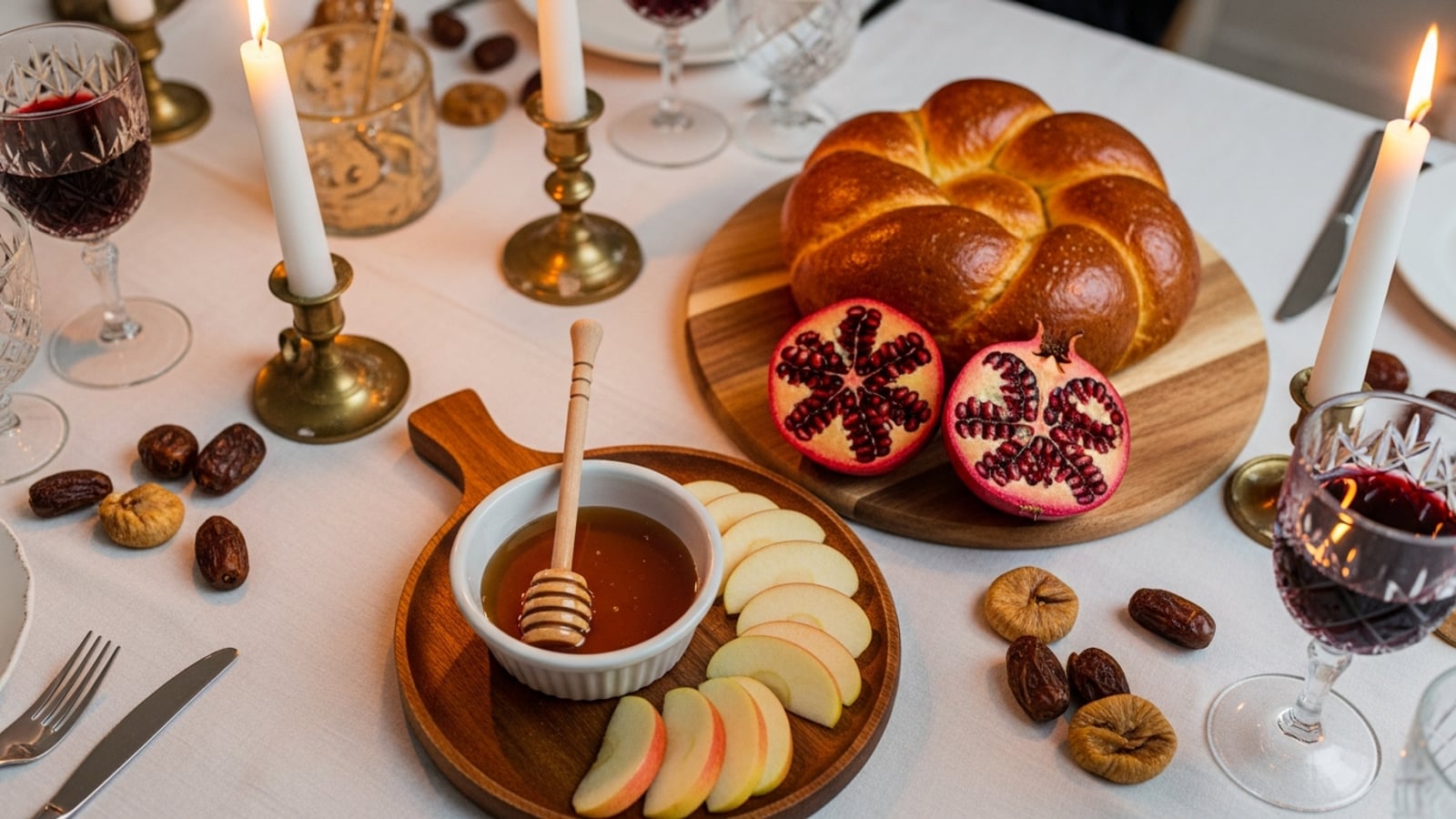
Rosh Hashanah, the Jewish New Year, begins at sundown on Friday, September 11, 2026, marking the start of the Jewish year 5787. It opens ten days of reflection and celebration — the High Holy Days — that culminate with Yom Kippur. For many families, the holiday centers on a festive dinner table filled with symbolic foods, blessings, and conversation.
Whether you are hosting for the first time or welcoming guests who have never attended before, this guide covers everything: what to serve, when to send invitations, how the evening flows, and what you and your guests need to know.
When to Send Invitations
Send invitations three to four weeks before September 11. Many guests will need to arrange synagogue tickets — High Holiday services often require advance purchase — and coordinate travel around a holiday that this year overlaps with Shabbat. Early invitations give people enough time to plan.
When you reach out, ask about dietary restrictions — specifically whether guests keep kosher. The answer shapes your entire menu. See our guide on when to send party invitations for timing advice that applies equally to holiday dinners.
Because the dinner has a fixed ritual structure, knowing your headcount matters more than it does for an open-house format. Set a clear RSVP deadline of two to three weeks before the event. Create a free RSVP page to collect responses and dietary notes in one place — then you can finalize your menu without chasing down confirmations by text.
The Symbolic Foods: Simanim
The heart of the Rosh Hashanah table is the simanim — symbolic foods whose Hebrew or Aramaic names connect to blessings for the new year. Each is accompanied by a short prayer. Here are the ones to include:
- Apples and honey — The most universally recognized symbol of the holiday. Guests dip apple slices in honey while saying a prayer for a sweet new year. Place a small honey dish and apple slices at every seat or in shared stations along the table.
- Round challah — Unlike everyday braided challah, the Rosh Hashanah version is baked in a round shape representing the cyclical nature of the year. It is dipped in honey rather than salt. Buy one from a local bakery or Jewish deli if you are not baking.
- Pomegranate — Its hundreds of seeds represent the 613 commandments of the Torah, with a wish to be filled with as many good deeds as there are seeds. Slice one open and arrange it on the table.
- Dates — The Hebrew word for date connects to a prayer that adversaries be ended. One date per person is sufficient.
- Carrots — In Yiddish, the word for carrot (meren) also means “more” — a symbol of increasing merits and blessings in the year ahead.
- Fish or fish head — Represents the hope to be a leader rather than a follower in the coming year. A piece of gefilte fish served as a first course covers this symbolically.
A widespread Ashkenazi custom is to avoid nuts on Rosh Hashanah, as the Hebrew word for nut shares a numerical value with the word for sin. This is not universal — Sephardic Jewish communities may eat them — but it is worth checking with your guests before planning any nut-based dishes or desserts.
Menu Planning
The most important rule: serve either an all-meat meal or an all-dairy and vegetarian meal — never both together. This follows basic kosher dietary law. Avoid pork and shellfish entirely regardless of what your individual guests observe.
Classic Rosh Hashanah dishes:
- Brisket — The classic centerpiece. Braised slowly with honey, onions, pomegranate molasses, and root vegetables, it tastes better made one or two days ahead and reheated. If you are cooking for a large group, this is one of the most practical mains you can choose.
- Roast chicken — A simpler alternative to brisket. Roast it with honey and herbs for a flavor profile that fits the holiday.
- Chicken soup — A traditional first course, often served with matzah balls or noodles.
- Tzimmes — A sweet slow-cooked dish of carrots, dried prunes or apricots, and sometimes sweet potato. The sweetness makes it a natural fit for the holiday.
- Kugel — A baked egg noodle or potato casserole. Sweet noodle kugel fits the holiday theme well.
- Honey cake (lekach) — The traditional dessert. Dense, spiced, and made with honey, it keeps for several days. Most Jewish bakeries sell it this time of year — buying one is entirely acceptable.
Build your menu around dishes that can be made in advance. Brisket, tzimmes, kugel, and honey cake all improve with a day of rest. If you are hosting a large group, this approach lets you focus on setting the table and greeting guests rather than cooking at the last minute — similar to the make-ahead philosophy in our potluck hosting guide.
How the Evening Flows
Before guests arrive, the host lights holiday candles (before sunset on September 11) and recites a blessing. This marks the beginning of the holiday.
Once everyone is seated, the dinner follows this order:
- Kiddush — A blessing over wine or grape juice. Everyone drinks a sip. Invite a Jewish guest to lead it if you are unfamiliar with the blessing.
- Hamotzi — The blessing over the round challah. The challah is uncovered, blessed, broken or sliced, and passed around. Guests dip their piece in honey.
- Simanim — Each symbolic food is presented with a short blessing. You can lead this with a printed guide, or ask a guest who knows the blessings to take the table through them.
- The meal.
Do not rush the blessings. The pace is part of what makes the evening feel different from a regular dinner party — it is built to slow everyone down and mark the occasion as meaningful.
Setting the Table
Traditional colors are white and gold. A white tablecloth with brass or gold candleholders sets the right tone. Place a small honey dish and apple slices at each seat or in shared stations along the table. Display the round challah on a wooden board with a decorative cover until the blessing.
For a centerpiece, arrange whole pomegranates, fresh apples, dried figs, and a piece of honeycomb. It doubles as decor and as part of the simanim display. The warm, abundant table style is similar in spirit to a Thanksgiving dinner — formal but generous, with the table itself telling the story of the occasion.
For Non-Jewish Hosts
Hosting a Rosh Hashanah dinner as a non-Jewish host is a generous gesture that Jewish guests genuinely appreciate. The most important step: ask each guest whether they keep kosher when you invite them. Some keep strictly kosher and will not eat food prepared in a non-kosher kitchen; others are more flexible. A direct question is always welcome and prevents any awkward surprises at the table.
If guests need kosher wine for Kiddush, look for a bottle marked with a kosher certification symbol (such as OU) at a local wine shop or Jewish grocery. You do not need to lead the blessings yourself — simply invite a guest who knows them to take the table through each one. Your job is to prepare the food, set the table, and create the space for the evening to happen.
For Non-Jewish Guests
If you have been invited to a Rosh Hashanah dinner and do not know the traditions:
- Greet your host with “Shanah Tovah” (shah-NAH toe-VAH) — “Good year.” A fuller version: “Shanah Tovah u’metuka” (“a good and sweet year”).
- What to bring: Wine (kosher-certified if possible), a jar of local honey, or flowers. Avoid nuts as a gift or shared dish.
- Participation: Dip an apple in honey, say Amen after blessings if you are comfortable, and follow the host’s lead. No prior knowledge is required.
- Tone: Rosh Hashanah is celebratory and warm, but also reflective — it is a time for self-examination and intention-setting for the year ahead. The evening will be social and full of food, but the mood is thoughtful rather than loud.
If you are the host and want to see how a structured celebration handles RSVPs and guest communication, take a look at how a bar mitzvah RSVP page works — the same tools apply to any holiday dinner where you need a firm headcount. And if RSVPs come in slowly, our RSVP reminder wording guide has polite follow-up templates you can send two weeks before the deadline.
Ready to create your event RSVP?
Build a beautiful event page in minutes. Share one link. Track every response in real time.
Create Your Free RSVP Link