How to Host a Masquerade Party: A Complete Planning Guide
Everything you need to plan a memorable masquerade party—venue, decorations, masks, food, and how to manage RSVPs for the big night.
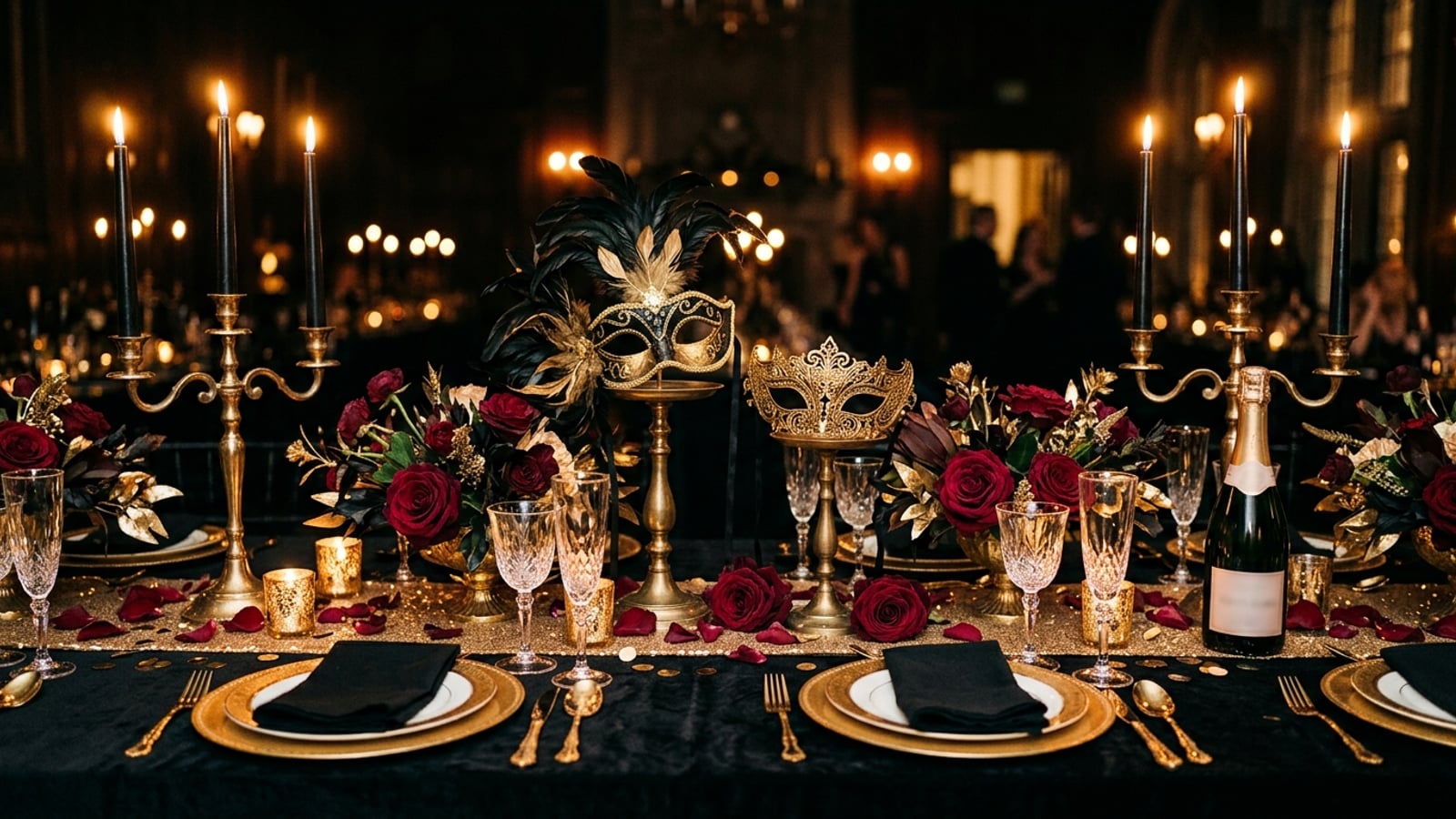
A masquerade party takes the energy of a costume party and turns the dial toward elegance. Where a costume party invites chaos, a masquerade invites mystery. The dress is formal, the masks are elaborate, and the atmosphere—candlelit, theatrical, slightly secretive—does most of the work for you. The result is one of the most memorable parties you can throw, and it is more achievable than it sounds.
Start Planning 4–6 Weeks Out
Masquerade parties require slightly more lead time than a casual gathering because guests need time to assemble their look. Six weeks gives them enough runway to source a mask and plan their outfit without panic-ordering the night before.
Lock in your date and venue first. A home can absolutely work—you'll just need to clear enough floor space for mingling and, if you want it, dancing. If you're planning for more than 25 guests or want a larger dance floor, a rented hall, hotel ballroom, or event space with character (exposed brick, high ceilings, period details) will elevate the atmosphere considerably.
Once the date is set, send invitations. For a masquerade, the invitation itself sets expectations—elegant design, a clear dress code, and an explicit note that masks are required (or at minimum encouraged). See our guide to dress code invitation wording for language that communicates formality without sounding stiff. Collect RSVPs with a deadline so you know your headcount before you finalize catering and decor orders—create a free RSVP page to make it easy for guests to confirm.
Choose a Theme and Color Palette
A masquerade party has a built-in aesthetic, but narrowing it with a sub-theme sharpens every other decision. Popular directions include:
- Classic Venetian: gold, black, and deep red; ornate masks; rich fabrics and candelabras
- Black and gold glam: simpler, more modern; sequin table runners, champagne, clean lines
- Dark enchantment: deep jewel tones—burgundy, midnight blue, forest green; more theatrical and gothic-leaning, perfect for Halloween-adjacent timing
- Great Gatsby: 1920s art deco; feather plumes, gold geometric patterns, jazz-era cocktails
Pick one direction and make every element—invitations, decor, food, music—speak the same visual language. Mixing themes produces a muddy look that undercuts the drama you're going for.
Set the Atmosphere with Decor
Lighting does more work than any decoration. Dim the lights as low as guests can comfortably navigate, then layer in warm light sources: pillar candles in varying heights, taper candles in gold or brass holders, string lights draped from above. If you're renting a space, ask whether they can dim overhead fluorescents entirely. Candle-only lighting is ideal, though LED candles work well in venues where open flames aren't permitted.
From there, the classic masquerade palette does the rest:
- Drape tables in black, deep purple, or navy linens
- Use ornate centerpieces—roses, dahlias, or dark floral arrangements in tall vases
- Scatter decorative masks on stands as table centerpieces or wall displays
- Add gold accents: charger plates, candleholders, ribbon, picture frames
- Hang sheer fabric from the ceiling or walls to add dimension and soften the space
You don't need to spend a fortune. A few dramatic centerpieces and good lighting carry more weight than a dozen understated touches.
The Masks: Your Most Important Detail
Masks are the heart of a masquerade. Communicate the expectation clearly on the invitation so no guest arrives without one. Consider having a small supply of backup masks near the entrance—purchased in advance—for guests who forget or whose masks don't survive transit. A mix of simple elegance and more elaborate options (feathered, rhinestone-accented, or painted) gives every guest something to work with.
Masks are also your best entertainment built-in: a best-mask vote at the end of the night is a crowd-pleaser, and the early mystery of not immediately recognizing everyone adds a social spark that regular parties lack. You can also run a "guess the masked guest" game where attendees try to identify each other—silly, but genuinely fun in a crowd where half the faces are partially hidden.
Food and Drink
Masquerade food should feel elevated but remain practical to eat. Guests wearing masks will appreciate food that doesn't require both hands or a fork and knife to manage while mingling. Aim for a mix of passed bites, a stationary spread, and one or two more substantial options.
Appetizers and bites: stuffed mushrooms, bruschetta with varied toppings, mini quiches, charcuterie and cheese boards, shrimp cocktail, caprese skewers
Main spread: if serving dinner, a buffet-style setup with creamy pasta, roasted meats, or a carving station is easier to execute than plated service for most home hosts
Desserts: macarons, mini cheesecakes, dark chocolate truffles, and a tiered cake (if budget allows) photograph beautifully and fit the aesthetic
Drinks: a signature cocktail named for the evening gives the bar a focal point—think something deep-colored (blackberry, pomegranate, dark cherry) or sparkling. Offer a non-alcoholic version with the same garnishes. Champagne or prosecco as the welcome drink sets the tone immediately.
Entertainment
Music anchors the experience. For the most immersive effect, start with classical or baroque music during cocktail hour, then transition to a DJ or curated playlist that blends big-band jazz, cinematic orchestral tracks, and modern dance music as the evening progresses. A small, open dance floor invites guests to move and keeps energy high.
If budget allows, live entertainment—a jazz trio, a string quartet for the first hour, or even a professional dancer giving brief lessons—adds a dimension that no playlist can replicate. Otherwise, a well-curated Spotify playlist set to randomize handles the job reliably.
Beyond dancing, consider:
- Best mask contest: guests vote anonymously, host announces the winner mid-evening
- Masquerade trivia: questions about famous masked figures in history, film, and literature
- Photo station: a backdrop and a few prop masks for group photos—guests love a tangible memory to take home
Managing RSVPs and Guest Logistics
Masquerade parties are venue- and catering-dependent in ways that backyard barbecues aren't. A surprise turnout of fifteen extra guests is manageable at a cookout; at a seated dinner or a capacity-limited venue, it's a problem. Set a firm RSVP deadline two weeks before the event—enough time to adjust your catering order and seating if needed.
In your RSVP form, collect meal preference if you're serving plated food, and ask about dietary restrictions. If you're hosting a seated dinner, you'll need this before you finalize the menu. A costume or themed party RSVP page gives guests a quick, one-click way to confirm and submit their details—no group chat thread, no chasing down responses manually. See our guide on how to get guests to actually RSVP if you find responses trickling in slowly.
For the invitation itself, our Halloween party invitation wording examples include language that adapts well to a masquerade's tone—formal, a little dramatic, and clear about what guests should wear and bring.
Night-Of Tips
A few details that separate a smooth masquerade from a chaotic one:
- Label your coat check area. Guests in formal attire often arrive in coats; a designated, organized space prevents the bedroom-pile problem.
- Introduce guests who don't know each other. The mystery element of masks can slow down organic conversation—a host who actively facilitates introductions keeps the energy moving.
- Have a timeline. Cocktail hour, dinner (or main food service), entertainment peak, mask contest, dancing. A loose structure prevents the party from losing momentum in the middle.
- Unmask at midnight—or don't. Some hosts make an unmasking moment the climax of the evening; others keep masks on all night. Decide in advance and note it on the invitation so guests know what to expect.
Ready to start? Create your RSVP page first—getting your guest list confirmed early is the one thing that makes every other planning decision easier.
Ready to create your event RSVP?
Build a beautiful event page in minutes. Share one link. Track every response in real time.
Create Your Free RSVP Link