How to Host a Christmas Party: A Complete Planning Guide
Everything you need to host a Christmas party — invitations, timing, food, decorations, and RSVPs — in one practical planning guide.
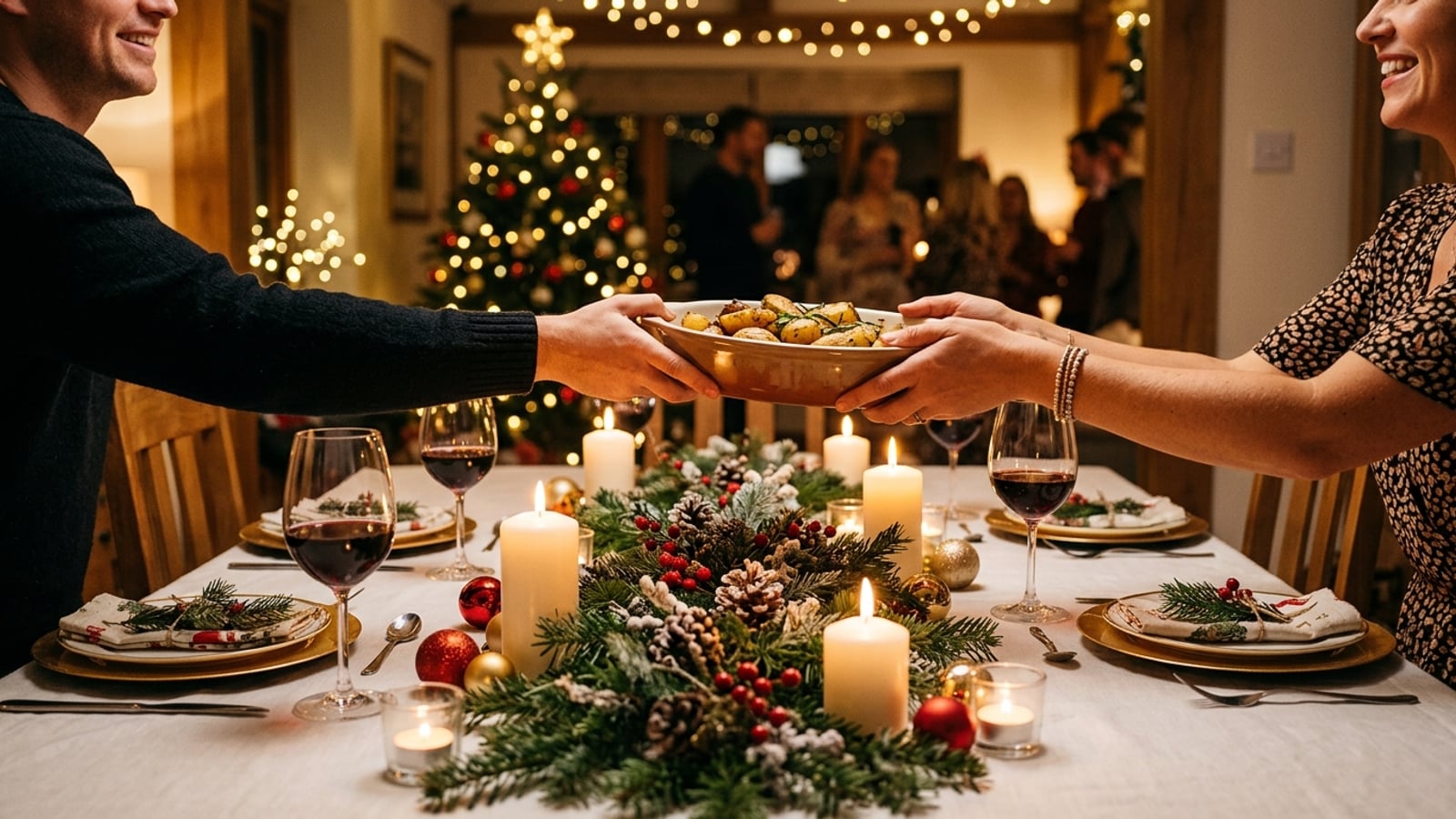
December calendars fill up fast. By the time Thanksgiving weekend ends, most of your guests have already committed to four other parties, three family dinners, and a cookie exchange. If you want people to actually show up, you need to plan earlier than you think and make RSVPing as easy as possible.
Here is how to host a Christmas party from first steps to final toast — without spending the whole night in the kitchen.
Start Planning Six Weeks Out
Six weeks gives you enough runway to lock in a date, get invitations out, and plan a menu without panic-buying everything at the last minute. Here is how to break it down:
- Six weeks before: Decide on your guest count, budget, and general format (dinner party, cocktail party, open house, or potluck).
- Four to five weeks before: Send invitations. This is the single most important timing move. December invitations sent in late November land when guests are still available; invitations sent in early December often miss the window entirely.
- Two to three weeks before: Confirm your headcount from RSVPs and finalize your menu and any rentals.
- One week before: Buy non-perishables, prep anything that can be made ahead, and plan your day-of timeline.
The format you choose drives every other decision. A seated dinner for 12 is a completely different event from a cocktail party for 40. Pick your format first, then plan around it.
Send Invitations Early — and Make RSVPs Easy
For Christmas parties, four to five weeks ahead is the minimum. Sooner is always better. By Thanksgiving, most people's December weekends are already competing with other obligations, so getting on their calendar in early-to-mid November — even with a digital invite — dramatically improves your attendance.
Every invitation should include: the date and start time, your address, the dress code if you have one, and a clear RSVP deadline. Set the RSVP deadline two weeks before the party. That gives you time to finalize your headcount and do a follow-up round with anyone who has not responded.
For wording help, see our Christmas party invitation wording guide with examples for casual, festive, and formal styles. And if you want to see what the guest experience looks like, preview a live Christmas party RSVP page before you create yours for free.
One practical tip on RSVPs: a shared group text or Facebook event sounds convenient but almost never produces a reliable headcount. A dedicated RSVP link gives every response in one place, so you know exactly who is coming when it is time to order food. See our guide on when to send party invitations for timing by event type.
Pick a Format That Fits Your Space
Seated dinner (up to 12 guests)
The most intimate option. Works well when you want real conversation and a proper meal. The downside is complexity — every dish is a course, every seat is an assignment. Do not attempt a seated multi-course dinner for more than 12 unless you have help.
Cocktail party or open house (20–50 guests)
The most forgiving format for larger groups. Guests arrive across a two-to-three hour window, graze on passed appetizers and food stations, and mingle without the formality of assigned seats. You stay out of the kitchen. A self-serve drink station helps enormously here — set it up and let guests pour their own so you can focus on being present.
Buffet dinner (12–30 guests)
A good middle ground. You can serve a full meal without the orchestration of a seated dinner. Set up the buffet table before guests arrive, put out plates and utensils at one end, and let people serve themselves. Works especially well with one or two large dishes that hold well over time.
Potluck (any size)
The most community-focused option and the easiest on your wallet. You handle the space and the main dish or drinks; guests bring sides, desserts, or appetizers. An online RSVP makes it easy to ask guests what they are bringing so you do not end up with six dishes of green bean casserole. See how our potluck planning guide covers dish coordination in detail.
Plan Food and Drinks by Format
Food quantity is the part most first-time hosts get wrong. The general guideline: plan one pound of food per adult guest, not counting beverages or dessert. For a cocktail-style party where appetizers are the main event, that works out to roughly six bites per person per hour.
A few practical rules:
- Do not try new recipes on guests. This is not the occasion for experimentation. Stick to dishes you have made before and know you can execute without stress.
- Make as much as possible ahead. Anything that needs to be hot can go in a slow cooker or warming drawer. Dips, salads, and most desserts improve with time in the fridge.
- Set up a self-serve drink station. Offer a signature holiday cocktail (or mocktail), wine, beer, and a non-alcoholic option. Pre-batch the signature drink so you are not making it to order all night.
- Ask about dietary restrictions on your RSVP. Collecting this information upfront means no scrambling the day of. See our full guide on handling dietary restrictions at a party.
Decorations: Cohesion Over Volume
The most common decoration mistake is doing too much in too many directions — snowflakes here, red and green there, a nutcracker on every surface. Pick one theme or palette and stick to it. A Winter Wonderland (all-white, silver, and ice blue) feels elegant. A classic Christmas (deep green, red, and gold) is timeless. A Hygge or Scandinavian theme (natural wood, warm neutrals, candlelight) feels warm and modern.
Whatever you choose, anchor it around the main gathering space — your dining table or living room — rather than decorating every room equally. Guests spend most of their time in two or three spots. That is where your effort belongs.
Practical tips:
- Use your Christmas tree as the visual centerpiece, not just a background decoration.
- Candles and string lights do more work than most decorations at a fraction of the cost.
- A simple tablescape — greenery, candles, a few ornaments — photographs well and takes 20 minutes to set up.
The Host's Day-of Checklist
The biggest hosting mistake: trying to do everything yourself the day of the party. Do your prep on the day before. When guests arrive, you should be present and unhurried, not chopping things in the kitchen.
- Set out drinks, ice, and glasses 30 minutes before the first guests arrive.
- Put any hot food in warming mode, not cooking mode, so you are not watching a timer.
- Have a playlist queued and running before anyone walks in the door — silence is awkward.
- Greet every guest at the door and make sure they have a drink within the first few minutes of arriving.
- Introduce guests who do not know each other by name with one connecting detail that gives them something to talk about.
Make RSVPs the Easiest Part
You have put real effort into planning this party. Do not leave RSVPs as an afterthought. A clear RSVP deadline, a simple response method, and a follow-up reminder for non-responders will get you a reliable headcount well before you need it.
For anyone who does not respond by your deadline, our guide on how to get guests to actually RSVP covers the follow-up strategies that work. Then create your Christmas party RSVP page for free — it takes under five minutes and gives every guest one clean link to respond, no group texts required.
Ready to create your event RSVP?
Build a beautiful event page in minutes. Share one link. Track every response in real time.
Create Your Free RSVP Link