How to Host a Chili Cook-Off Party: A Complete Planning Guide
Everything you need to host a chili cook-off: equipment, judging system, prize ideas, and how to keep a crowd of slow cookers from blowing a fuse.
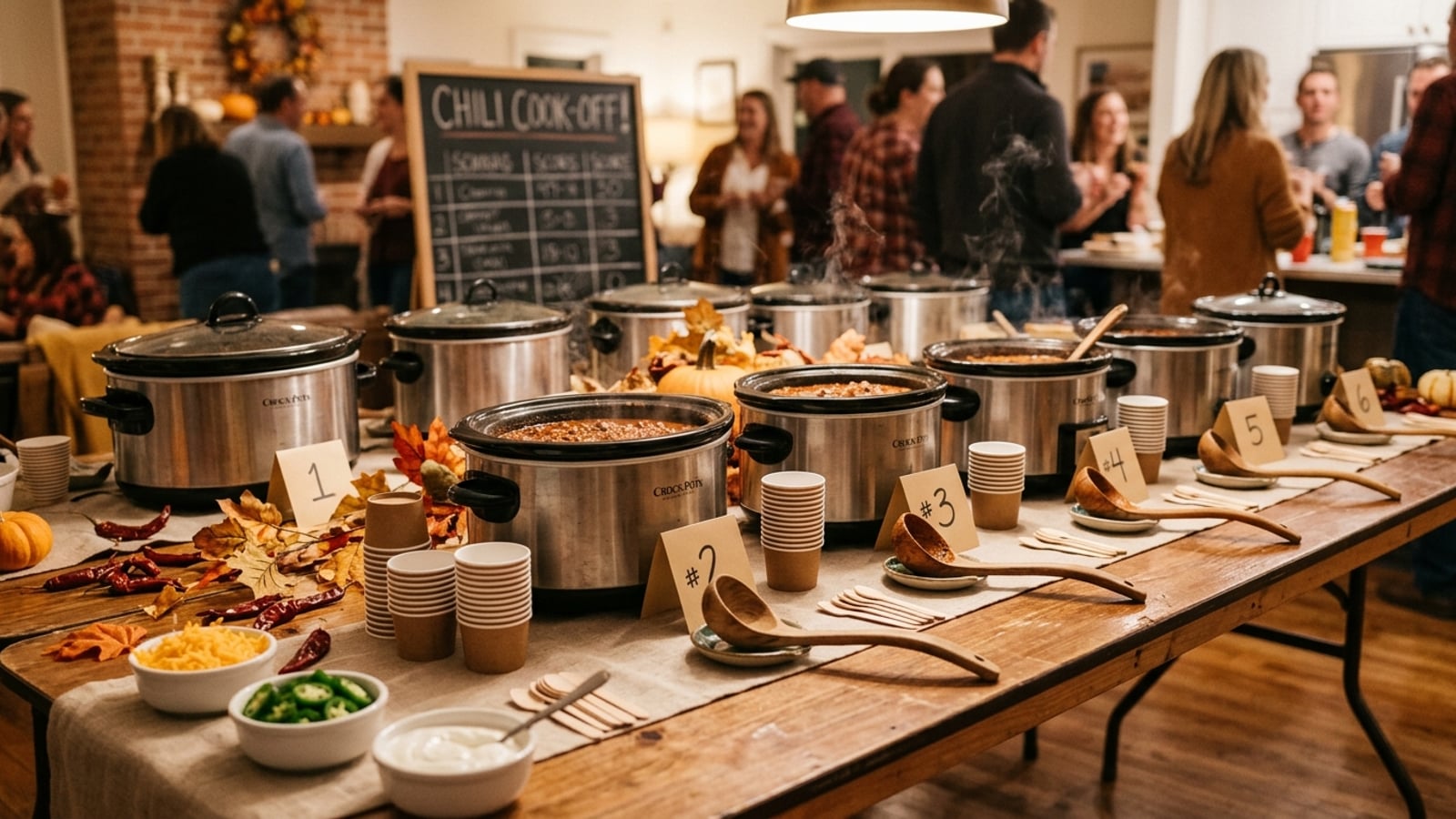
A chili cook-off is one of the most host-friendly parties you can throw. Your guests do most of the cooking, your costs stay low, and everyone leaves having eaten more bowls of chili than they planned to. The format works equally well in a backyard in October, a living room in January, or a garage on a football Sunday.
Here is how to run one that people will talk about—and want to win—next year.
Pick Your Format First
Decide upfront whether you want a true competition or a casual tasting. Both are great; they just require different preparation.
- Competitive format: Participants enter to win. Numbered samples, anonymous judging, official ballots, prizes for the top entries. The stakes make it more engaging, but it requires more logistics from you as host.
- Casual tasting: Everyone brings a pot and guests eat what they like. No judging, no pressure. Works well for groups where some people might feel anxious about competition.
Most hosts go competitive—it gives the event a structure that keeps the crowd engaged and gives people a reason to put real effort into their recipe. This guide assumes competitive format, but most advice applies to casual tastings too.
Date, Venue, and Invitations
Chili cook-offs are a natural fit for fall and winter—cool weather, football season, and the general craving for something warm and hearty all align. Weekend afternoons work well: contestants have time to cook that morning and arrive early afternoon for setup.
For venue, you need enough electrical outlets and extension cords to run multiple slow cookers simultaneously. Indoors works fine if you have enough table space; a garage or covered patio manages the heat and aromas better when you have a large group. Plan for roughly one six-foot folding table per every five or six entries, plus a separate area for tasting and a toppings bar.
When you send invitations, be specific about what participants need to bring—otherwise you will get the same five questions over text. A clean RSVP page that asks whether each guest is entering a chili or just attending gives you an accurate count before you plan for outlets and supplies. For invitation text, see the chili cook-off invitation wording guide for formal and casual examples.
How Many Entries Do You Need?
A meaningful competition needs at least six to eight chili entries. Fewer than that and the contest can feel thin. More than twelve gets logistically challenging—guests start losing track of what they tasted.
If you are not sure you will hit six entries, recruit a few committed friends before the invitations go out. Once the first few people sign up, others tend to follow.
Host Equipment Checklist
As host, you are responsible for the setup, not the food. Here is what to have ready:
- Folding tables and tablecloths
- Extension cords and power strips (more than you think you need—assign slow cookers to different circuits if possible)
- Two- or three-ounce sample cups for tasting
- Full-size bowls and spoons for second helpings
- Extra ladles (contestants forget theirs)
- Napkins and paper towels
- Numbered labels or tent cards for each entry
- Printed scorecards and pens
- A ballot box or envelope for collecting votes
Ask participants to bring their chili in a slow cooker to keep it warm throughout the party, and to bring their own ladle. Confirm there will be an outlet for each one. Before the party, map out which slow cookers go where—multiple high-wattage appliances on a single circuit can trip a breaker mid-event.
What Participants Should Bring
Keep it simple for your contestants. Each entry typically needs:
- A slow cooker with a full batch of chili (a standard 6-quart serves about ten people at sample-sized portions)
- Their own ladle
- An index card with the chili's name and key ingredients—no contestant names, since you will replace the card with a number
- Optional: a signature garnish or topping unique to their entry
Ask each contestant to write a short chili description ahead of time—you can read these aloud during the reveal for added ceremony. Some hosts pair the chili contest with a potluck-style side spread, inviting non-competing guests to bring cornbread, chips, or drinks so everyone contributes something.
Setting Up the Tasting Station
When contestants arrive, assign each entry a number and place the corresponding numbered label on the slow cooker. Keep the master list—which number belongs to which person—away from guests until voting closes.
Set up a separate tasting table with sample cups, a palate cleanser (plain crackers or sliced bread), and water. A toppings bar makes the experience more fun and gives guests a reason to go back: shredded cheddar, sour cream, sliced jalapeños, diced white onion, Fritos, lime wedges, and avocado are classics. If any entries are vegetarian or contain common allergens, label them clearly at the station. The guide to handling dietary restrictions at parties has a practical system for labeling and organizing food stations.
The Judging System
The International Chili Society scores entries on five attributes: aroma, consistency, color, taste, and aftertaste. For a home competition, a simpler four-category scorecard works well and is easy for guests to fill out without overthinking it:
- Aroma – Does it smell inviting before you taste it?
- Taste – How does the overall flavor hit?
- Heat level – Is the spice well-balanced, or does it overpower everything else?
- Texture – Are the beans and meat cooked well? Is the consistency right?
Have each guest score every entry from 1 to 10 in each category. Total the scores across all judges. The entry with the highest total wins. Ask guests not to score their own chili—the honor system works fine for a home event.
Award Categories
Multiple award categories keep more people in the running and make the reveal more entertaining:
- Best Overall – Highest total score on the main scorecard
- Spiciest – A separate popular vote for the entry that brought the most heat
- Best Vegetarian – If you have meatless entries
- Most Creative or Most Unexpected Ingredient – A fan-favorite crowd vote for the wildcard entry
Multiple categories mean more prizes without inflating your budget, and they prevent the same person from sweeping every year.
Prize Ideas
Prizes do not need to be expensive—they just need to feel earned. Themed prizes work best:
- A curated basket of hot sauces, dried chiles, and specialty spices
- A custom apron, engraved wooden spoon, or small trophy
- A restaurant gift card
- A mini slow cooker for next year's entry
- A "defending champion" sash or ribbon to wear at next year's event
The Reveal
Timing the reveal matters. Announce winners before guests get too full or too tired—usually about two hours in, after everyone has tasted the entries and submitted ballots. Start with third place and build to the champion. Read the chili name and the maker's name before handing over the prize. If contestants wrote descriptions, read those aloud—they add humor and make each entry feel recognized.
After the reveal, the party naturally shifts into open eating. Now that the mystery is gone, guests go back for the ones they liked most. For your next cook-off, set up your RSVP page at least two weeks in advance so you have a firm count before you plan for outlets, tables, and supplies.
Ready to create your event RSVP?
Build a beautiful event page in minutes. Share one link. Track every response in real time.
Create Your Free RSVP Link