Thanksgiving Invitation Wording: Examples for Every Style
Formal, casual, and potluck Thanksgiving dinner invitation wording — with RSVP tips on timing, dietary restrictions, and plus-ones.
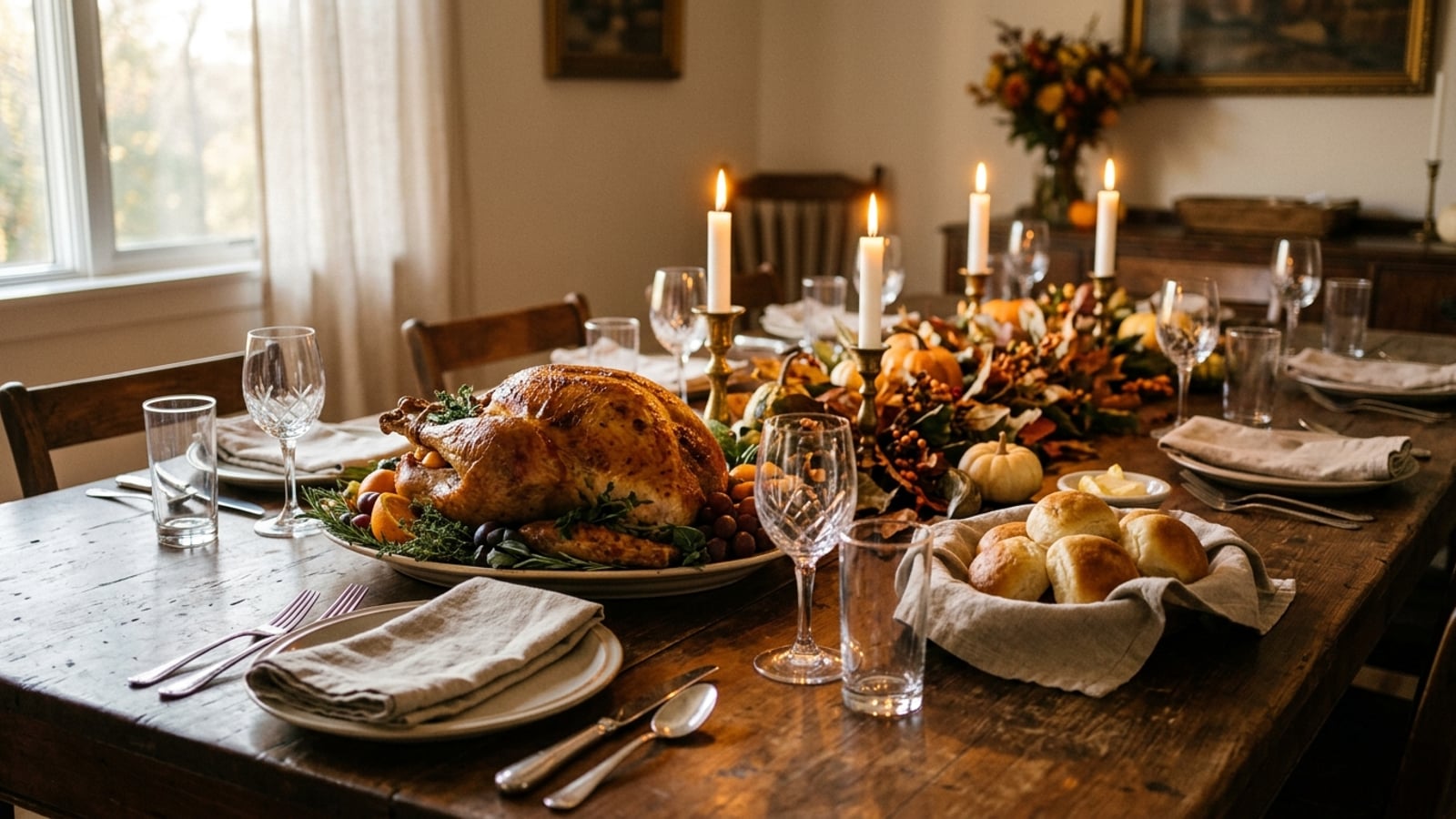
A Thanksgiving invitation does something other holiday invites rarely have to do: it tells people that a seat has been saved specifically for them, not just that a party is happening. The tone matters as much as the logistics — and yet most Thanksgiving invitations fall back on generic templates that feel like form letters. Here is how to write one that actually feels like an invitation.
What Every Thanksgiving Dinner Invitation Needs
Before choosing your wording style, make sure you have covered these six basics:
- Who is hosting. Name the host or family.
- Arrival time and dinner time. These are two different numbers. List when guests should arrive (for drinks, appetizers) and when dinner will actually be served — guests need both.
- Full address. Include parking notes or entrance instructions if relevant, especially for out-of-town guests.
- What to bring (if anything). If you want guests to bring a dish or a bottle of wine, say so on the invitation — not as a follow-up text a week later.
- Attire. Even if it is casual, a single word like "casual" or "festive" saves guests from second-guessing. For a formal dinner, say so explicitly.
- How to RSVP. A specific deadline and a clear method — a link, an email, or a phone number. "Let me know if you can make it" is not an RSVP.
Once your RSVP page is set up, it collects headcounts, dietary restrictions, and guest names in one place. Create a free Thanksgiving RSVP page so every response lands somewhere you can actually use it.
Formal Thanksgiving Dinner Wording
A formal Thanksgiving dinner — whether it is an annual family tradition at a large table or an elegant dinner party — calls for wording that conveys care and occasion. Key conventions: spell out the date in full, use family titles, avoid contractions, and replace "RSVP" with "Kindly reply by."
Mr. and Mrs. Gerald and Anne Cortland request the pleasure of your company for Thanksgiving Dinner on Thursday, the twenty-seventh of November at half past five in the evening 1400 Chestnut Lane, Philadelphia Cocktails at five o'clock Kindly reply by November seventeenth
The Ramirez Family invites you to join us at our Thanksgiving table Thursday, November the twenty-seventh Dinner served at six o'clock in the evening Cocktails from five Please reply by the twentieth of November and let us know of any dietary considerations
For a formal dinner, it is worth specifying the menu or at least the centerpiece dishes — a heritage turkey, a specific stuffing, the family pie. This serves a practical purpose: it gives guests a natural opportunity to flag any dietary restrictions before you have already committed to a menu.
Casual Family Gathering Wording
Most Thanksgiving dinners are warm, informal, and multigenerational — and the invitation should sound like that. Skip the formal conventions and lead with something personal.
The table is set. The turkey is planned. Come hungry — and come grateful. Thanksgiving Dinner at our place Thursday, November 27th Arrive at 3 PM · Dinner at 4:30 456 Maple Street, Denver RSVP by November 18th: [link or contact] Let us know about any food allergies!
This Thanksgiving, we are grateful for you. Join us for dinner on Thursday, November 27th. Come at 3 — we eat at 4. Our home, 891 Birch Lane. Please RSVP by November 19th so we have enough chairs. [link]
It would not be Thanksgiving without you. Thursday, November 27th · 2 PM The Henderson house, 123 Oak Drive Turkey is handled. Everything else is up for grabs. RSVP by November 16th and let us know what you will bring.
Notice that the last example above introduces the potluck element directly in the invitation — which is exactly where it belongs.
Potluck and Collaborative Thanksgiving Wording
A potluck Thanksgiving is practical and joyful, but only if the coordination happens upfront. The invitation must specify who is providing the turkey (and drinks), what is expected of guests, and — critically — how people should claim their dish so you do not end up with twelve pies and no salad. Include a sign-up link or a reply prompt.
We will bring the turkey. You bring your favorite dish. Thanksgiving Potluck Dinner Thursday, November 27th · 3 PM The Williams home, 789 Elm Avenue RSVP and claim your dish by November 18th: [link] (We will provide the main and drinks — sides, salads, and desserts are all yours.)
Come hungry. Bring something delicious. Our annual Thanksgiving potluck is back. Thursday, November 27th Gather at 2:30 · Eat at 3:30 [Address] Sign up for your dish by November 17th: [link] or just bring yourself — we will not run out of food.
If you are hosting a Friendsgiving with a younger or chosen-family crowd rather than a traditional family dinner, the wording shifts further toward the informal and communal — see our Friendsgiving invitation wording guide for examples tailored to that style.
Thanksgiving RSVP Timing
Thanksgiving falls on the fourth Thursday of November every year, which means guests are managing travel plans, competing family commitments, and holiday schedules well in advance. This makes early invitations more important for Thanksgiving than for most events with a flexible date.
- Local guests: Send invitations 3–4 weeks before Thanksgiving.
- Guests who need to travel: Send 4–6 weeks out so they can book travel without stress.
- RSVP deadline: Set it 7–10 days before the dinner. You need that window to finalize your grocery order, buy the right-sized turkey, and plan seating.
Send a gentle RSVP reminder to anyone who has not responded one or two days before the deadline. Most missed RSVPs are forgetfulness, not avoidance — a friendly nudge is expected, not rude.
See our full guide on when to send party invitations for timing advice across every type of event.
How to Handle Dietary Restrictions
Ask in writing — in the invitation or on the RSVP form — so guests have time to answer thoughtfully and can respond privately. Asking by phone in the final days before the dinner puts guests on the spot and gives you less time to plan.
A few wording options to include in your invitation or RSVP:
- "Let us know about any food allergies or dietary restrictions."
- "Any dietary needs we should plan around? Tell us when you RSVP."
- "Please let us know if there is anything you do not eat — we want everyone to have plenty on their plate."
Warm phrasing like "we want everyone to have plenty" reads better than clinical language like "special dietary requirements" and tends to generate more honest responses from guests who might otherwise hesitate to mention a restriction.
If you are using a digital RSVP page, include a free-text field for dietary notes. A live Thanksgiving dinner RSVP example shows how that information comes through on the host's end.
Plus-Ones at Thanksgiving
Thanksgiving carries a particular cultural expectation of generosity when it comes to guests. If a guest mentions that a friend or family member will be visiting and would otherwise be alone for the holiday, consider extending an invitation if you have space — it is the spirit of the occasion.
When it comes to formal plus-one policy, communicate it clearly on the invitation itself. Address the envelope or the digital invite to both names if a partner is included, or to "[Name] and Guest" if you are open to an unnamed guest. Addressing it to one person only is an implicit signal that no plus-one is included — which avoids the awkward follow-up conversation on both sides.
For a digital RSVP, include a field for additional guests so you collect their names in advance for seating and place cards.
What Makes Thanksgiving Invitations Different
Unlike a Christmas party or New Year's Eve gathering, Thanksgiving invitations are meal-first. The dinner is the event — not the backdrop for it. That means being specific about menu and timing matters more here than at most other gatherings. And because Thanksgiving carries real emotional weight for many guests around family, food traditions, and sometimes distance or loss, the tone of the invitation should feel like an act of welcome, not just an announcement of logistics.
Lead with the people, not the schedule. "We are grateful you will be at our table" sets a different tone than "You are invited to Thanksgiving dinner." Both say the same thing — one of them feels like it means it.
Once your wording is set, the fastest way to manage RSVPs without a spreadsheet or a text thread is a dedicated RSVP page for your Thanksgiving dinner. Every response — headcount, dietary needs, dish contributions — comes in organized and in one place, so you can focus on the cooking.
For everything that comes after the invitations go out — menu planning, timing your cook, setting up the seating — see our complete guide to hosting Thanksgiving dinner.
Ready to create your event RSVP?
Build a beautiful event page in minutes. Share one link. Track every response in real time.
Create Your Free RSVP Link