Save the Date vs. Invitation: What to Send and When
Learn the difference between save the dates and invitations, what to include on each, and exactly when to send them for weddings and other events.
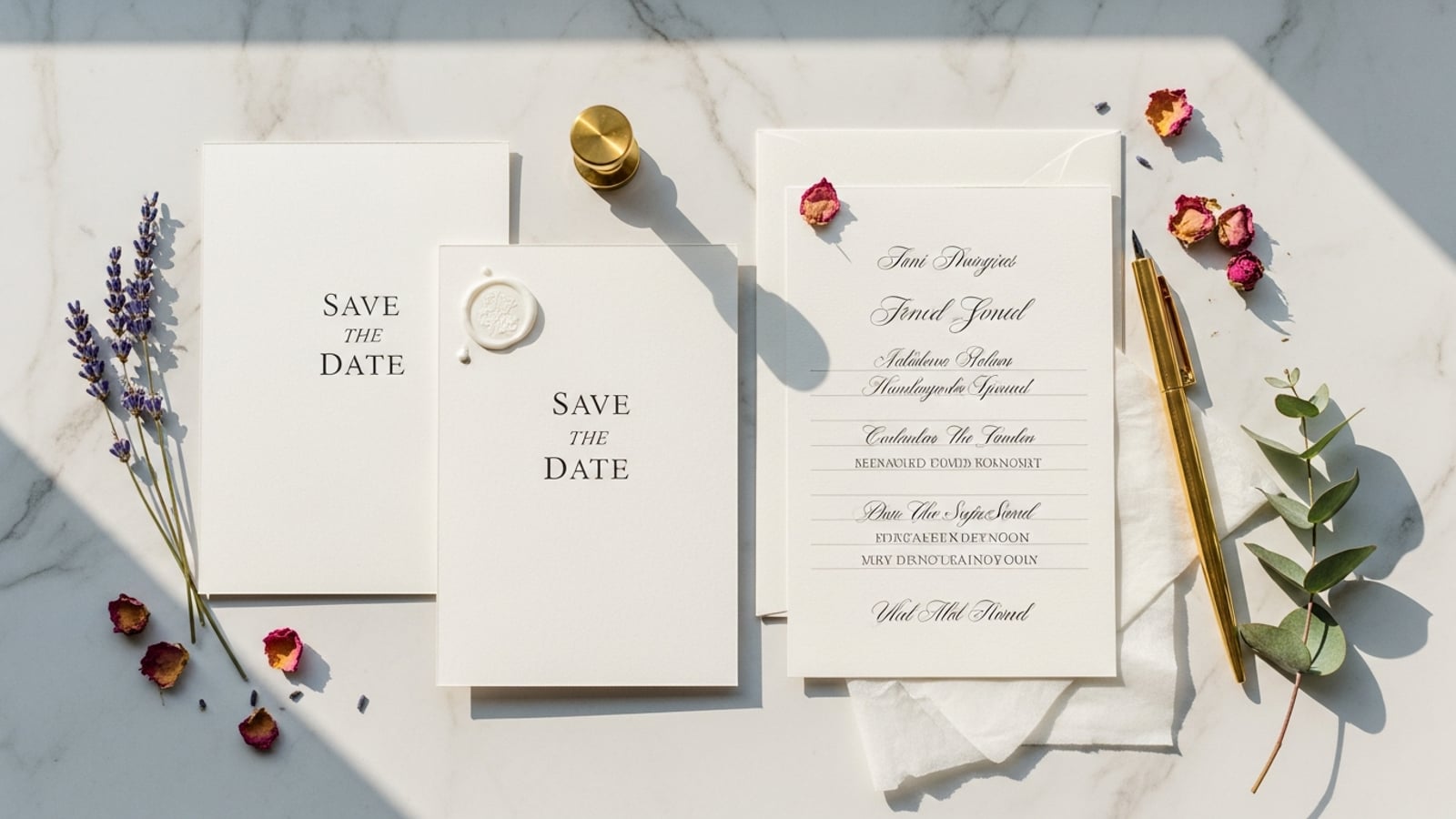
If you're planning a wedding or a milestone event, you'll likely send two rounds of mail: a save the date first, then the formal invitation. Most people aren't sure which one to send when, or what goes on each. Here's a clear breakdown.
What Is a Save the Date?
A save the date is an early announcement that tells guests your event is happening on a specific date. It's not an invitation — there's no RSVP, no venue details, no formal request to attend. It simply reserves space on people's calendars before the official invitation arrives weeks or months later.
Save the dates are most common for weddings, but they work well for destination events, milestone birthday parties, family reunions, and any celebration where guests need lead time to book travel or arrange schedules.
What Is a Formal Invitation?
The invitation is the official request to attend. It contains everything guests need to show up: the full venue address, ceremony and reception times, dress code, and — most importantly — the RSVP deadline and response method. This is the piece guests respond to, so it needs to make responding as frictionless as possible. If you're setting up an online RSVP page for your event, the invitation is where you share that link.
The Core Difference
Think of it this way: a save the date claims a date on someone's calendar. An invitation asks for a commitment and gives them everything they need to respond and attend.
Save the date: "We're getting married — block this date."
Invitation: "Please join us — here are all the details, RSVP by this date."
When to Send a Save the Date
Timing depends on how far guests need to travel and how complex the logistics are:
- Local or regional weddings: 6–8 months before the date
- Destination weddings: 10–12 months before, so guests can book flights and accommodations
- Holiday or peak-travel weekends: Add a month or two — demand fills early
For non-wedding events, the window is shorter. A milestone birthday or anniversary celebration warrants a save the date 4–6 months out if guests are traveling. For a baby shower or local gathering, 1–3 months ahead is typically sufficient. See our full guide on when to send party invitations for event-specific timing.
When to Send the Formal Invitation
Invitations go out closer to the event, once all details are confirmed:
- Local weddings: 6–8 weeks before the date
- Destination or holiday-weekend weddings: 10–12 weeks before
- Birthday parties, showers, and other events: 3–6 weeks before, depending on complexity
A common mistake is mailing invitations too far out. Sent four months early, invitations get filed away, forgotten, and left un-RSVPed. Six to eight weeks gives guests enough time to respond without so much lead time that it slips their minds.
What to Put on Each
Save the Date
Keep it short. These four elements are required:
- Host or couple names
- Full event date — not just "summer 2027"
- City and state (or destination country)
- "Formal invitation to follow" — without this, some guests treat the save the date as the invitation itself and show up without RSVPing
Optional additions: a wedding website URL or hotel block information. Full venue address, dress code, and RSVP details all belong on the invitation, not here.
Formal Invitation
The invitation needs to give guests everything they need:
- Full names of hosts or couple
- Complete date, day of week, and start time
- Full venue address
- Reception or after-party details if different from the ceremony location
- Dress code (if any)
- RSVP deadline and how to respond
The RSVP deadline deserves special thought. Venues and caterers typically need final headcounts 1–2 weeks before the event, so set your printed deadline at 3–4 weeks out. That buffer gives you time to follow up with anyone who hasn't responded before you need to submit final numbers. An online RSVP page makes tracking responses effortless — every reply lands in one dashboard instead of scattered across texts and voicemails.
One Rule You Cannot Break
Anyone who receives a save the date must receive a formal invitation — no exceptions. Sending a save the date is a binding promise of inclusion. The guest has cleared their calendar, possibly arranged travel, and may have turned down other plans. To then leave them off the invite list causes real offense.
The practical lesson: don't send save the dates until your guest list is at least 90% finalized. Cutting someone before they've received a save the date is easy. Cutting them after is not.
Do You Need Both?
Not always. Save the dates make sense when:
- Many guests need to travel or book flights
- The event falls on or near a holiday or peak-travel weekend
- It's a large formal event — a wedding, a destination milestone birthday, a multi-family reunion
- You're competing for attention during a busy social season
For a local dinner party, a neighborhood gathering, or a casual birthday, skip the save the date and go straight to the invitation — or share a simple RSVP link with guests directly. See how the invitation side works with a live wedding RSVP example or a birthday party RSVP example to get a feel for the guest experience.
The Short Version
Save the date: early heads-up, no RSVP needed, keep it brief. Formal invitation: full details, clear deadline, easy way to respond. The two-piece approach works best for weddings and major celebrations where guests need lead time. For everything else, a well-worded invitation with a clear RSVP setup is enough on its own. Before you send either, brush up on RSVP etiquette from the guest side — knowing what hosts expect helps you write instructions guests will actually follow.
Ready to create your event RSVP?
Build a beautiful event page in minutes. Share one link. Track every response in real time.
Create Your Free RSVP Link