
How to Host a Trunk-or-Treat: A Complete Planning Guide
Everything you need to plan a successful trunk-or-treat — timing, car registration, candy amounts, decoration themes, and safety tips.
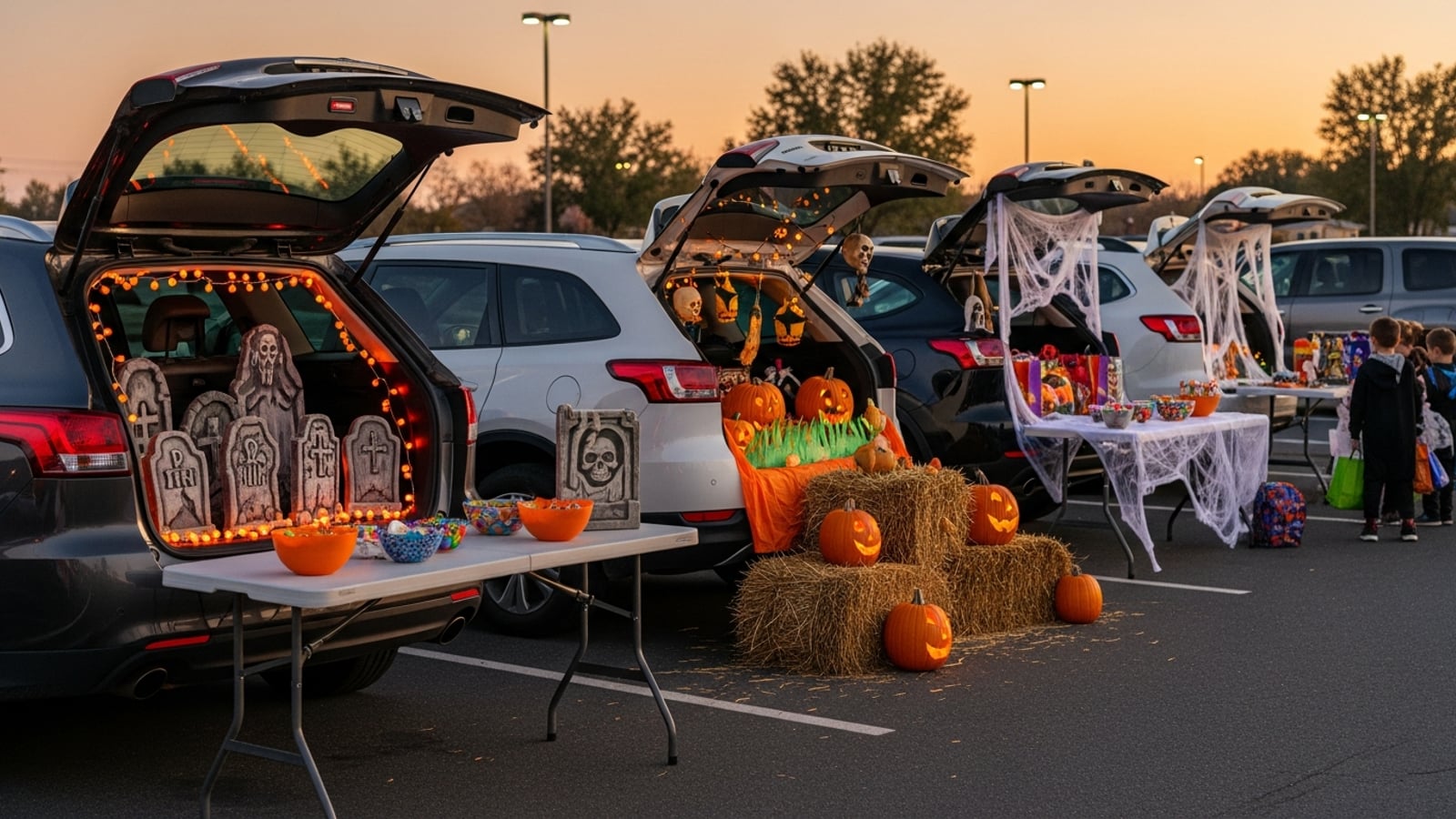
Trunk-or-treat has become one of the most popular Halloween traditions for neighborhoods, schools, churches, and community organizations. It is safer and more contained than door-to-door trick-or-treating, it gives adults a chance to get creative with their car decorations, and it lets kids collect an impressive haul in a fraction of the time. Here is how to organize one that actually comes together.
What Is Trunk-or-Treat?
Trunk-or-treat started as a way for churches and schools to offer a controlled alternative to door-to-door Halloween trick-or-treating. Participants park their decorated cars in a lot, pop open their trunks (or hatchbacks or pickup beds), and kids move car to car collecting candy — much like trick-or-treating, but in a single well-lit location. Today trunk-or-treats are hosted by neighborhood associations, workplaces, and any group looking for a community Halloween event.
Set Your Date and Time
Most trunk-or-treats happen on the Friday or Saturday before Halloween rather than on October 31st itself. This frees up Halloween night for families who want to do traditional trick-or-treating and makes it easier to draw bigger crowds who might otherwise be busy.
Start time matters more than most hosts expect. If your parking lot is not lit after dark, schedule the event for late afternoon so natural light works in your favor. A 4–6pm window is ideal — early enough for families with young children, late enough to feel festive. If the event runs into the evening, plan for battery-powered string lights at each trunk or generator-powered floodlights positioned around the lot.
Find the Right Venue
A well-lit, paved parking lot is the standard venue. Church lots, school parking lots, and neighborhood community center lots are common choices because they are flat, familiar to guests, and often already insured for community events. When scouting a space, check whether it is lit after dark, whether there is room to leave an empty parking spot between participating cars (this spaces out the flow of kids and reduces crowding), and whether there is a separate overflow area for non-participating guests to park.
A smaller lot can comfortably handle 10–15 participating cars. Larger events with 30 or more cars need significantly more room — and more planning ahead.
Register Car Participants Early
Collecting RSVPs from the people decorating their cars is the most important logistical step. You need a headcount to determine spacing, assign spots, and communicate guidelines before the event. Start collecting sign-ups about a month out. When participants register, share the rules upfront: theme guidelines (if any), what time to arrive for setup, whether candy is centrally provided or each car brings their own, and where to park during setup versus during the event.
Number your spots ahead of time — chalking numbers onto parking spaces works well — and have someone on-site to direct cars as they arrive. Allow at least one hour for setup before guests begin arriving.
Create a dedicated RSVP link for car participants so you can track who is coming, what themes they are planning, and whether they have any setup needs — all in one place instead of buried in a group text.
Decide How Candy Works
There are two common models: each car brings their own candy, or the organizer buys in bulk and distributes it across all trunks. Both work. The centralized model makes budgeting easier and ensures no car runs out early; the decentralized model is simpler to organize and gives each participant more control.
If each car brings their own supply, a reasonable guideline is preparing for 100 trick-or-treaters and restocking from a reserve bag if they run low. For very large events, some organizers recommend planning for 200 children per participating car. Non-candy treats are always worth including — glow sticks, stickers, erasers, small bouncy balls, and Halloween-themed pencils are welcome alternatives for kids with food allergies.
Include the Teal Pumpkin
The Teal Pumpkin Project, launched in 2012 by the Food Allergy Community of East Tennessee (FACET), asks participants to offer non-food treats alongside or instead of candy. A teal pumpkin displayed on a trunk signals to parents that allergy-friendly options are available. According to FARE (Food Allergy Research & Education), 1 in 13 children has a food allergy, and more than 65% of children with food allergies have had a negative Halloween experience because of their condition. Encouraging at least a few participating cars to go teal ensures every child at your event can take part fully. FARE maintains a free registry where you can list your event at foodallergy.org.
Pick a Theme — or Let Cars Choose Their Own
One of the best parts of trunk-or-treat is the creativity that comes out of it. You can give participants complete freedom, suggest an overall event theme (spooky, harvest, movies, decades), or let each car pick their own. Popular trunk themes that tend to look great in a lineup:
- Haunted graveyard — foam tombstones, cobwebs, LED flickering lights, and a fog machine tablet
- Pumpkin patch — hay bales, mixed pumpkins, fall leaves, and a scarecrow propped by the bumper
- Pirate ship — treasure chest, black and gold streamers, a DIY mast made from PVC pipe
- Día de los Muertos — marigolds, sugar skull decorations, bright pinks and oranges
- Storybook character — one consistent character carried through all the decorating and the host's costume
Encourage participants to dress in costume that matches their trunk theme. It makes the walk from car to car feel like its own little adventure.
See a live costume party RSVP example to preview what guests experience when they respond to your event invitation.
Add Games and Activities
The cars do not have to just hand out candy. Many participants set up a simple carnival game alongside their trunk — a ring toss, bean bag throw, or rubber duck fishing game adds only a few minutes of setup time and significantly raises the energy level of the whole event. Keep games short and simple enough for young children to play in 30 seconds and move on to the next car.
If you want to go bigger, bring in a food truck or organize a chili dinner in the center of the event. Combining a meal with trunk-or-treat turns a one-hour candy run into a full community evening.
Safety Basics That Are Easy to Overlook
A few safety details that often get forgotten until it is too late:
- Lighting. If your event runs into the evening, every trunk should have its own light source — battery-powered string lights, lanterns, or clip-on work lights. A poorly lit car is both unsafe and far less fun.
- Traffic separation. Close off the trunk-or-treat area to all through traffic before the event starts. Kids crossing a live lot is an unnecessary risk.
- Allergy communication. Even outside the Teal Pumpkin program, let families know in advance which trunks are nut-free, especially at school events where known allergies are common.
- Costume safety. Remind participants to use flame-resistant costume materials and avoid masks that limit visibility. Add reflective tape to kids' bags and costumes if the event runs past sunset.
Promote It and Send Invitations
Start promoting about three weeks out — a post or two per week on social media, flyers in common spaces, and a digital invitation that makes RSVPing easy. A good invitation tells families exactly when and where to show up, what to bring (costume, treat bag, good energy), and makes it easy to say yes with a single link.
See our guide on trunk-or-treat invitation wording for ready-to-use examples you can copy, adjust, and send today. For broader Halloween planning ideas, our Halloween party planning guide covers themes, food, and timing that applies to any large October event.
When you are ready, create your event RSVP page — it takes about two minutes, gives every car participant and attending family a clean form to fill out, and puts all your responses in one dashboard you can actually use to plan the event.
Ready to create your event RSVP?
Build a beautiful event page in minutes. Share one link. Track every response in real time.
Create Your Free RSVP Link