How to Host a Sip and Paint Party: A Complete Planning Guide
Everything you need to host a sip and paint party at home — supplies, canvas selection, setup, drinks, and how to run the session step by step.
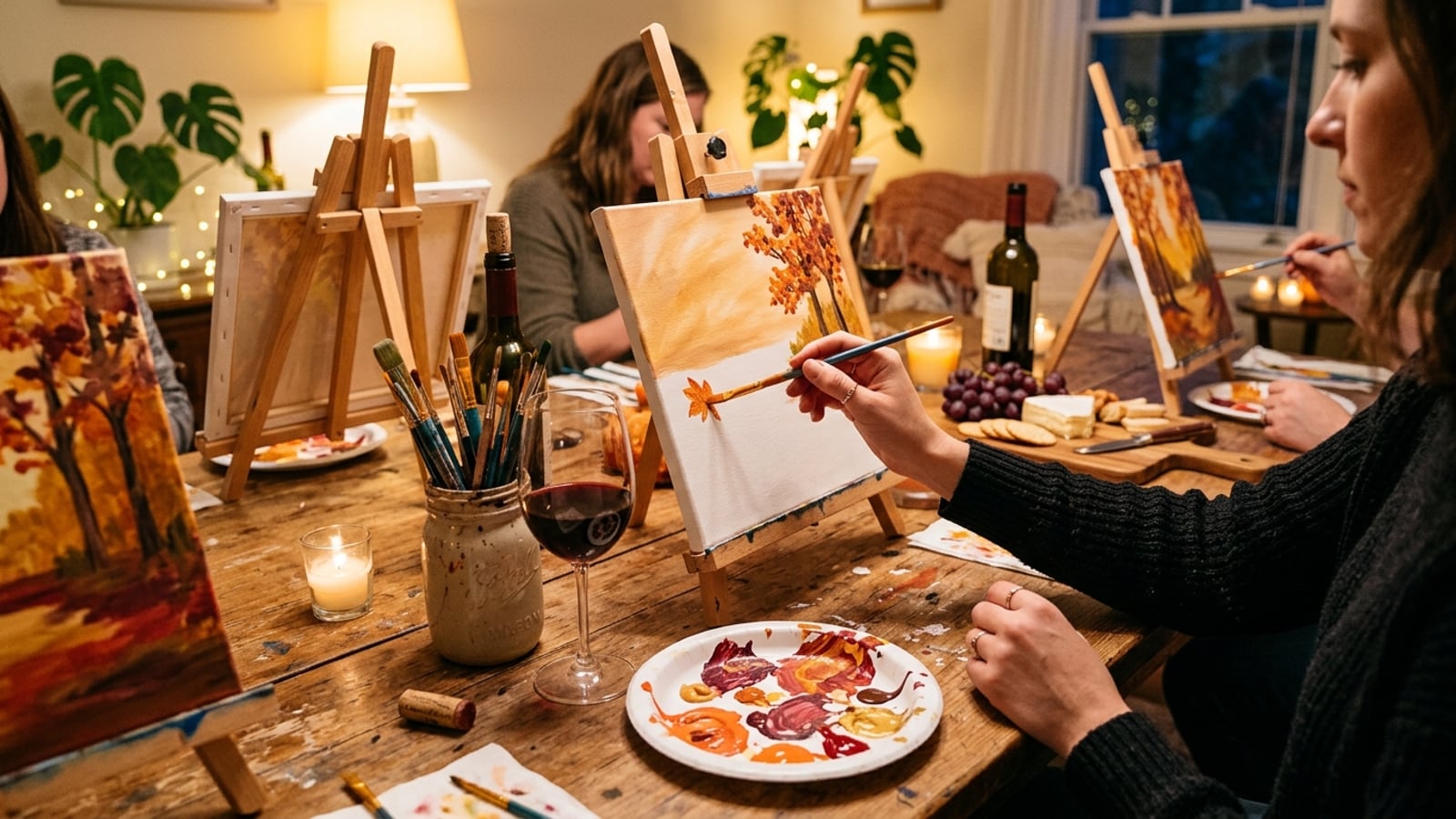
A sip and paint party is one of the easiest gatherings to host well — low-pressure, creative, and memorable without requiring a large space or a lot of money. The format is simple: guests paint the same subject at the same time, guided step by step, while enjoying drinks and conversation. No experience required, on either side of the equation.
The catch is that this party type lives or dies on preparation. Canvases, brushes, paint, and tablecloths all have to be ready before the first guest walks in — and every single one depends on your final headcount. That makes collecting RSVPs before you shop a non-negotiable, not a nice-to-have.
Choose a Painting Everyone Can Actually Finish
The single most important decision is the painting subject. A subject that is too complex kills the mood — guests feel frustrated instead of proud. A subject that is too simple wraps up in 45 minutes and leaves two hours of awkward downtime.
Aim for a subject with three to four distinct layers: a simple background, one or two mid-ground shapes, and one main focal element. Fall landscapes work beautifully — a tree silhouette against a sunset sky, a pumpkin on a wooden surface, a rustic farmhouse in autumn fog. Abstract designs with repeating shapes (chevron, simple florals, geometric patterns) are another excellent choice because guests can make the piece their own within a defined structure.
Before the party, do a full practice run yourself. Time it. If it takes you more than 90 minutes, simplify. Your guests will take longer than you do, and you need to build in time for sipping, chatting, and breaks between steps.
How Many Guests to Invite
The sweet spot for a home sip and paint is eight to twelve guests. Below eight, the room can feel flat; above fifteen, it gets difficult to guide everyone through the same steps in sync, and the supply logistics grow complicated quickly. If you want to host a larger crowd, consider breaking into two back-to-back sessions instead of one big one.
That said, the exact number matters less than knowing it early. Every canvas, every brush set, every paint tray is bought per person. A surprise guest the night of the party is genuinely harder to accommodate than in almost any other party format — you cannot split a canvas. Use an online RSVP link and set a firm headcount deadline at least five days before the event so you can shop accurately.
Supplies Checklist (Per Guest)
Gather these for each person attending:
- One canvas. A 16×20-inch canvas is the most comfortable size for adults — large enough to feel satisfying, small enough to carry home. An 11×14 works well for smaller tables or tighter budgets.
- Three brushes. A large flat brush for backgrounds, a medium flat for shapes and mid-detail, and a small round for fine lines and finishing touches. Cheap craft-store sets of three are fine.
- Acrylic paints. Pre-squeeze the colors your painting needs onto paper plates or disposable palettes. Acrylic dries fast, is water-soluble for cleanup, and works on canvas without priming. Plan on six to eight colors per station, shared from central squeeze bottles at each table.
- A cup of water. For rinsing brushes between colors. Reusable plastic cups or mason jars both work well.
- A paper plate or palette paper. For mixing colors at the station.
- An apron or old shirt. Acrylic paint does not wash out of fabric. Offer these or ask guests to wear something they do not mind ruining — mention it explicitly on the invitation.
- Paper towels. One or two sheets per station, and a shared roll on the table.
For easels: tabletop easels are not required. Many people prefer painting flat on the table, especially beginners. If you have a few tabletop easels, offer them as an option, but do not buy twelve if you only own two.
Setting Up the Space
Cover every table surface with disposable tablecloths, plastic sheeting, or parchment paper. Acrylic paint will find the gap between supplies and the table. Protect accordingly — your dining room table will thank you.
Arrange stations before guests arrive. Lay out the canvas, brushes, a water cup, paper plate, paper towel, and apron at each seat. Put the squeeze bottles of paint in the center of the table so guests can share them without reaching past each other.
Lighting matters more than most guides mention. Bright, even light — a well-lit room with ceiling fixtures or daylight — makes a huge difference in how well guests can see their colors. Dim ambient lighting looks beautiful in photos but makes it hard to distinguish dark blue from dark purple. If your space is on the darker side, add a couple of table lamps pointed upward to lift the overall brightness.
For music, choose something instrumental or familiar-but-low that does not compete with conversation. A lo-fi or jazz playlist at moderate volume is the default that works for almost any group.
Drinks and Food
The "sip" half of the party does not require a full bar. Wine — a red and a white, or a rosé — is the classic choice, and it pairs well with the casual creative mood. Sparkling water, lemonade, or mocktails should always be on the table as alternatives. Not every guest drinks, and the party should work equally well for them. See our cocktail party hosting guide for tips on building a simple drinks station that handles itself without constant tending.
For food, keep it simple and hand-held. A cheese board, crackers, grapes, and olives out at the start is the standard for a reason: guests can snack while they paint without needing utensils. Avoid anything too greasy — paint and oil do not mix on canvases. If you want to serve a proper meal, do it before the painting starts or save it for the very end.
You can also frame the whole event as a creative cocktail gathering — set up a small signature drink station with a self-serve batch cocktail or a mocktail punch, and let guests help themselves throughout the session.
How to Run the Session
Give guests fifteen to twenty minutes to arrive, settle, and get a drink before you start. Then open with a brief, encouraging introduction: explain the painting, tell them the time is relaxed, emphasize that the goal is enjoyment not perfection, and walk them through the steps at a pace they can follow.
Break the painting into discrete phases with natural pauses between them:
- Background layer. The full canvas gets its base color or gradient. This dries fast.
- Mid-ground shapes. Trees, hills, the main architectural element — whatever gives the painting its structure.
- Focal element. The main subject gets painted in and refined.
- Details and finishing touches. Highlights, leaf textures, a moon — whatever makes the piece feel complete.
Call a break after the background dries — about ten to fifteen minutes — for refills and chatting. This is the natural social reset of the evening and it keeps energy up through the longer middle section.
If you are not comfortable instructing yourself, search for a step-by-step video of your chosen subject on YouTube and stream it. Many people find this easier than trying to talk and paint simultaneously, and it frees you to circulate and help individual guests who get stuck.
RSVPs: Why They Matter More for This Party Than Most
Almost every party benefits from accurate RSVPs, but a sip and paint makes the stakes unusually concrete. You cannot add a canvas at the last minute the way you can add a chair to a dinner table. Your supply order is locked in. Showing up uninvited — or backing out the day of after you confirmed — genuinely costs the host money and disrupts the evening's flow.
Set an RSVP deadline five to seven days before the party. Send the invitation two to three weeks out — that is enough lead time for a casual gathering without giving people so much runway that they forget. If responses are slow in the week before the deadline, our RSVP reminder wording guide has phrasing that prompts responses without sounding demanding.
On your RSVP form, ask about dietary restrictions for the snacks — and if you are offering a signature cocktail, consider asking whether guests prefer alcoholic or non-alcoholic so you can batch the right amount of each. A well-designed RSVP link handles all of this in one place. Create your sip and paint RSVP page before you finalize the guest list, so the link is ready to share the moment you send invitations.
One final note: send guests home with their paintings. It seems obvious, but in the end-of-night cleanup, canvases sometimes get left behind. Remind everyone as you wrap up, and make sure each painting is dry enough to carry. That finished canvas is the best party favor you could give — and the main reason guests will be asking when you are hosting the next one.
Ready to create your event RSVP?
Build a beautiful event page in minutes. Share one link. Track every response in real time.
Create Your Free RSVP Link