
How to Plan a Family Reunion: A Complete Host's Guide
From picking a venue to managing RSVPs across family branches, here's how to plan a family reunion that everyone actually shows up to.
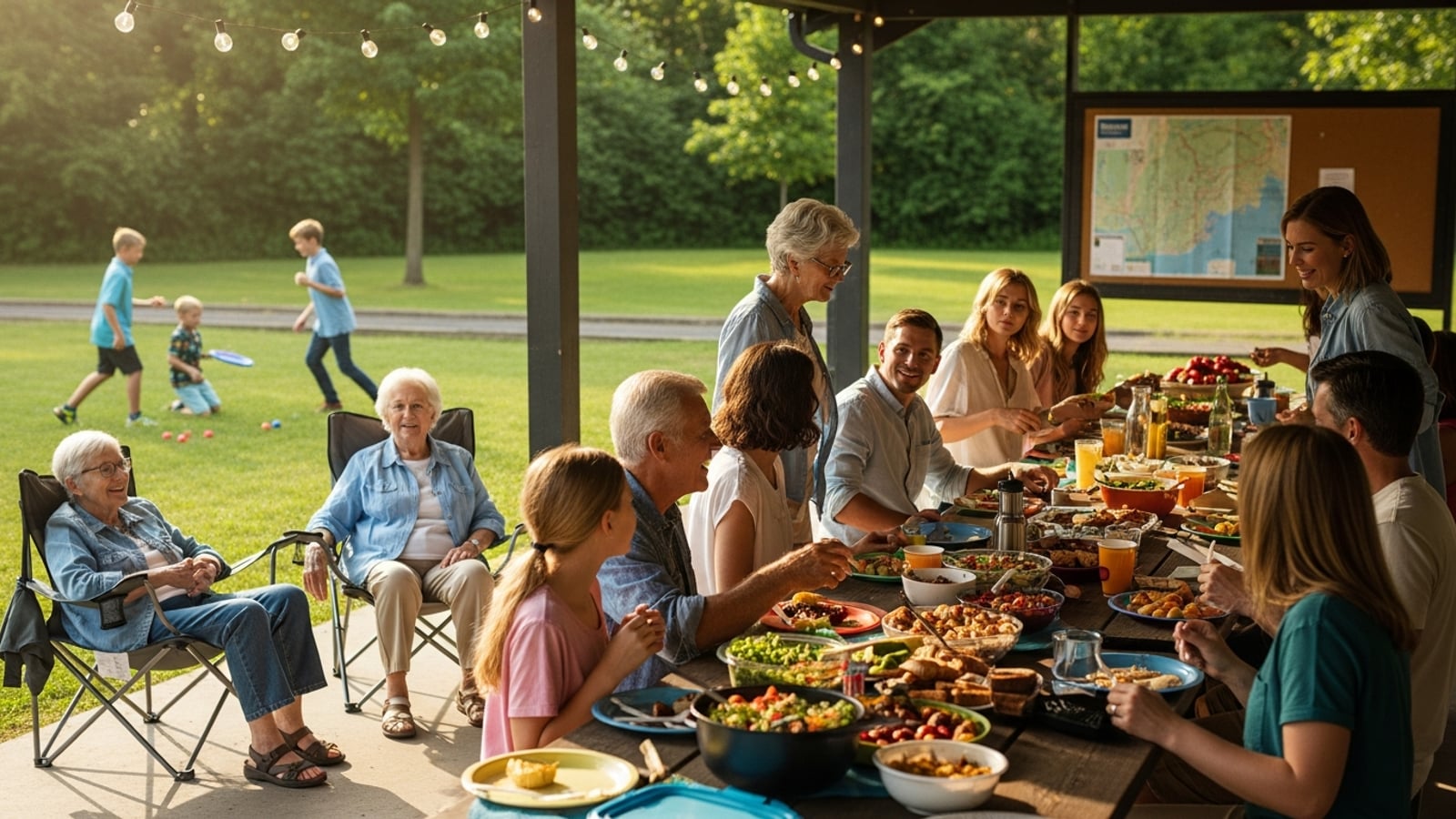
Family reunions are the most logistically complicated gatherings most people will ever host. You are coordinating across generations, time zones, and family branches — people who check email daily, people who barely own a smartphone, and everyone in between. A 30-person dinner party is straightforward. A 60-person family reunion spread across four states is a different project entirely.
Here is how to pull it off without losing your mind — from locking in the venue to getting every last cousin to actually RSVP.
Start Planning Earlier Than You Think
Six to twelve months of lead time is the standard for a family reunion of any real size. That is not an exaggeration — it is the reality of coordinating travel, vacation schedules, lodging, and catering across an extended family. July and August are peak reunion months, which means popular venues (lake houses, park pavilions, campgrounds) book up fast.
Start by forming a small planning committee of three to five people from different family branches. Give each person a defined role: lead organizer, treasurer, communications lead, activities coordinator, and food coordinator. Involving multiple branches in planning also means more people are invested in making sure attendance is high.
Lock In Your Venue First
Everything else follows from the venue. Common options include:
- Public park pavilions. Affordable and spacious, with room for outdoor games. Requires a reservation and often has catering restrictions.
- Vacation rental homes. Works well for smaller reunions (20–40 people). Combines lodging and gathering space, which simplifies logistics considerably.
- Campgrounds or retreat centers. Good for multi-day reunions. Built-in activities and everyone stays on-site, which increases connection time.
- Resorts or conference venues. Best for large reunions (50+ people) that need professional catering and climate-controlled space.
Whatever you choose, prioritize accessibility. A venue with no shade or no indoor backup for rain punishes older relatives and families with young children. Look for a layout that can support different activity zones simultaneously — quiet seating for elders, open space for kids, shaded tables for the main crowd.
Send a Save-the-Date, Then Follow With Invitations
For a summer reunion, send save-the-dates six to eight months in advance. This gives family members who need to book travel, request time off, or coordinate with multiple household schedules enough runway to actually show up. A simple message — date, city, more details coming — is enough at this stage.
Send formal invitations three to four months before the event. These should include:
- Exact dates, location, and start and end times
- Lodging options if the venue does not include accommodations
- The RSVP deadline and a direct link to respond
- What to bring, what is provided, and any cost information
- A contact name for questions
For guidance on timing invitations for different event types, see our complete invitation timing guide. And for families with older relatives who prefer phone or mail, build a hybrid approach: send a physical card or make a direct phone call for those who will not respond to digital invitations.
Managing RSVPs Across Family Branches
This is where most family reunion planning breaks down. You send the invite, a handful of people respond, and then silence from everyone else — while you wait to finalize catering and lodging numbers with a rapidly approaching deadline.
The fix is to make responding as easy as possible and track everything in one place. Create a single RSVP page and share the link in every channel you use — the group text, the family Facebook group, the email, and the physical card for relatives who need one. One link, one response form, all answers in one place.
Set your RSVP deadline six to eight weeks before the event — not one week out. You need that buffer to follow up with non-responders, adjust your headcount with the caterer, and finalize lodging. Make the deadline explicit on every touchpoint: the save-the-date, the invitation, and the follow-up reminder.
About two months out, send a reminder to anyone who has not yet responded. Our guide to RSVP reminder wording has templates that work for family group texts and individual messages alike. For family members who still have not responded after the deadline, a direct phone call almost always works — a personal ask from a family member is harder to ignore than a link in a group chat.
Track RSVPs by family branch in a simple spreadsheet alongside your guest list. This makes it easy to see at a glance which whole branches have gone quiet and who needs a follow-up call. Your RSVP form should also collect dietary restrictions — you will need that information for catering, and it is much harder to gather after the fact. See a sample family reunion RSVP page to see what a well-designed response form looks like for guests.
Activities That Work Across Generations
The best family reunion activities are ones that do not require athletic ability or tech savvy, create natural conversation between ages, and give people something to do together without forcing it. A few that consistently work:
- Family trivia. Create questions across decades of family history. Mix easy ones ("What city did Grandma grow up in?") with harder ones. Mixed-age teams work best.
- Scavenger hunt. Organize teams so kids, parents, and grandparents are together. The collaboration itself is the point.
- Heritage station. Set up a table with old family photos, letters, and a family tree. People drift in and out all day. Elders become storytellers, kids become curious.
- Talent show or lip sync battle. Low stakes, high participation rate. Invite anyone who wants to perform — you will be surprised who steps up.
- Yard games. Cornhole, bocce, and horseshoes need no explanation and work at any age.
Plan multiple activity zones so not everyone has to be doing the same thing at once. A quiet seating area, an active games space, and a dedicated kids zone let people self-select into whatever energy level they are in without missing out on the gathering.
Food: Potluck, Catering, or Somewhere in Between
For smaller reunions under 30 people, a coordinated potluck often works better than catering — people contribute dishes, cost is distributed naturally, and the food reflects the family. Use your RSVP page to collect dish assignments alongside attendance confirmations so you do not end up with twelve pasta salads and no dessert.
For larger groups, a catered BBQ or food station setup (taco bar, burger station, sandwich spread) gives you control over quantity and dietary variety without the unpredictability of a potluck. Get your final headcount to the caterer at least two weeks before the event. Bring your dietary restriction list organized by type — "4 vegetarian, 2 gluten-free, 1 tree nut allergy" — so they can plan accordingly.
The Final Month
Four weeks out: confirm final numbers with your venue and caterer, send a "what to expect" update to everyone who RSVPed yes (parking, what to bring, the day's schedule), and designate a day-of point person who is not you. If you are also managing food, activities, and family politics, you need someone whose only job is answering questions at the entrance.
One week out: send a final reminder with directions, parking, and any last-minute details. Keep it short — people have already committed. This is just logistics, not another invitation.
One Thing That Makes All of It Easier
The single biggest source of frustration in family reunion planning is not the venue booking or the food — it is chasing down RSVPs from dozens of people across different communication habits and time zones. A dedicated RSVP page solves this: one link, one place where all responses land, clear visibility into who has confirmed and who has not.
Create your family reunion RSVP page early in the planning process — ideally when you send your first save-the-date — and share it consistently across every channel you use. The response rate difference between "reply to this email" and a direct link to a simple form is significant. Make it easy, and more people will do it.
Ready to create your event RSVP?
Build a beautiful event page in minutes. Share one link. Track every response in real time.
Create Your Free RSVP Link